
Jack Be Nimble


Lyrics
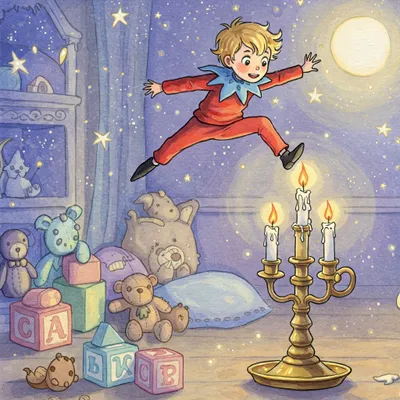
Jack be nimble,Jack be quick,Jack jump overThe candlestick
History and Meaning
Four lines, and children act them out by leaping over something on the floor, a cushion, a block, or, as the rhyme has it, a candlestick. That last detail is not random. Jumping a lit candle was once a real game and a way of telling fortunes.
Origins
The oldest recorded version of this rhyme is found in a manuscript dating to approximately 1815. The rhyme was later collected and published for a wider audience by the English nursery rhyme scholar James Orchard Halliwell in 1844. While the written record begins in the nineteenth century, the oral tradition and the associated physical games likely date back much further.
Meaning & Interpretation
The primary interpretation of the rhyme relates to a traditional game known as candle-leaping. During the seventeenth and eighteenth centuries, candle-leaping was a popular sport and form of fortune-telling. Participants would place a burning candle on the floor and attempt to leap over it. If they cleared the flame without extinguishing the candle, it was believed to bring good luck or indicate a prosperous year ahead.
Another popular, though unproven, theory links the rhyme to an English pirate named Black Jack Smatt. According to local legend in Port Royal, Jamaica, Smatt was a highly evasive figure who frequently escaped authorities through quick movement, leading to songs celebrating his nimbleness.
What was the sport of candle leaping?
Candle-leaping was a traditional game and divination practice where people jumped over a lit candle. Successfully clearing the flame without putting it out was considered an omen of good luck and future prosperity.
Who wrote the rhyme Jack Be Nimble?
The author of "Jack Be Nimble" is unknown, as the rhyme originated in English oral folklore. The earliest written documentation appears in a manuscript from 1815, and it was first formally published in 1844 by folklorist James Orchard Halliwell.
Music Video
If the player is unavailable, watch this video on YouTube.
Related Nursery Rhymes


Lyrics from nurseryrhymes.info