

Jack and Jill


Lyrics
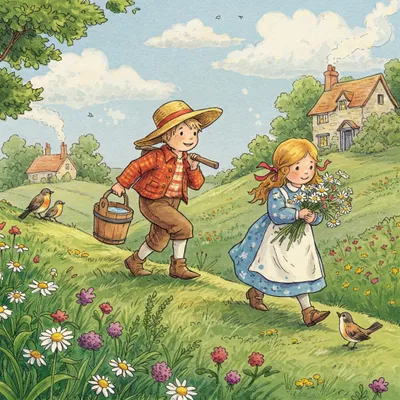
Jack and Jill went up the hillTo fetch a pail of water.Jack fell down and broke his crown,And Jill came tumbling after.
Up Jack got, and home did trot,As fast as he could caper,He went to bed to mend his head,With vinegar and brown paper.
Jill came in and she did grinTo see his paper plaster;Mother, vex’d, did whip her nextFor causing Jack's disaster.
History and Meaning
Two children climb a hill for a pail of water, Jack falls and cracks his head, and Jill comes tumbling after. Most people know only that first verse, but the rhyme runs to three, and Victorian printings stretched it to fifteen.
Origins
The rhyme is cataloged under number 10266 in the Roud Folk Song Index. It was first printed around 1765 in London as part of John Newbery's famous compilation Mother Goose's Melody. In early printings, the spelling was "Jack and Gill," reflecting the historical spelling of the name. While the first verse is the most widely sung today, later nineteenth-century editions expanded the rhyme to fifteen verses, introducing a mother character called "Old Dame Gill."
Meaning & Interpretation
The story is often read as a simple cautionary tale about childhood accidents and chores. Jack breaks his "crown," which refers to the top of his head rather than a royal headpiece. His injury is treated with vinegar and brown paper, a common domestic remedy in eighteenth-century Britain. The mixture of vinegar and paper acted as a cooling, astringent plaster to reduce swelling and treat bruises.
A historical linguistic detail supports the theory that the song was sung long before its 1765 publication. The rhyming of "water" and "after" suggests the rhyme dates back to the seventeenth century or earlier, when the words were pronounced as "wah-ter" and "ah-ter."
Why did Jack and Jill go up the hill for water?
Wells are usually dug in valleys where the water table is closer to the surface. However, Jack and Jill likely went up the hill to collect water from a "dew pond," which was an artificial rainwater collection pond built on high ground, common in England since Anglo-Saxon times.
What is vinegar and brown paper used for in Jack and Jill?
In the eighteenth century, brown paper soaked in vinegar was a common home remedy. It was used as a plaster to soothe bruises, reduce swelling, and help heal cuts on the head.
Music Video
If the player is unavailable, watch this video on YouTube.
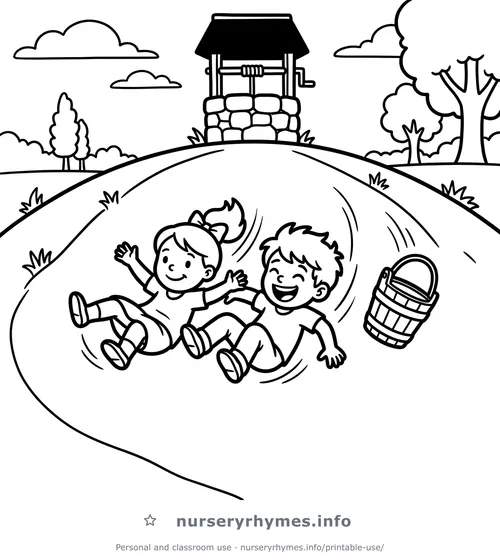
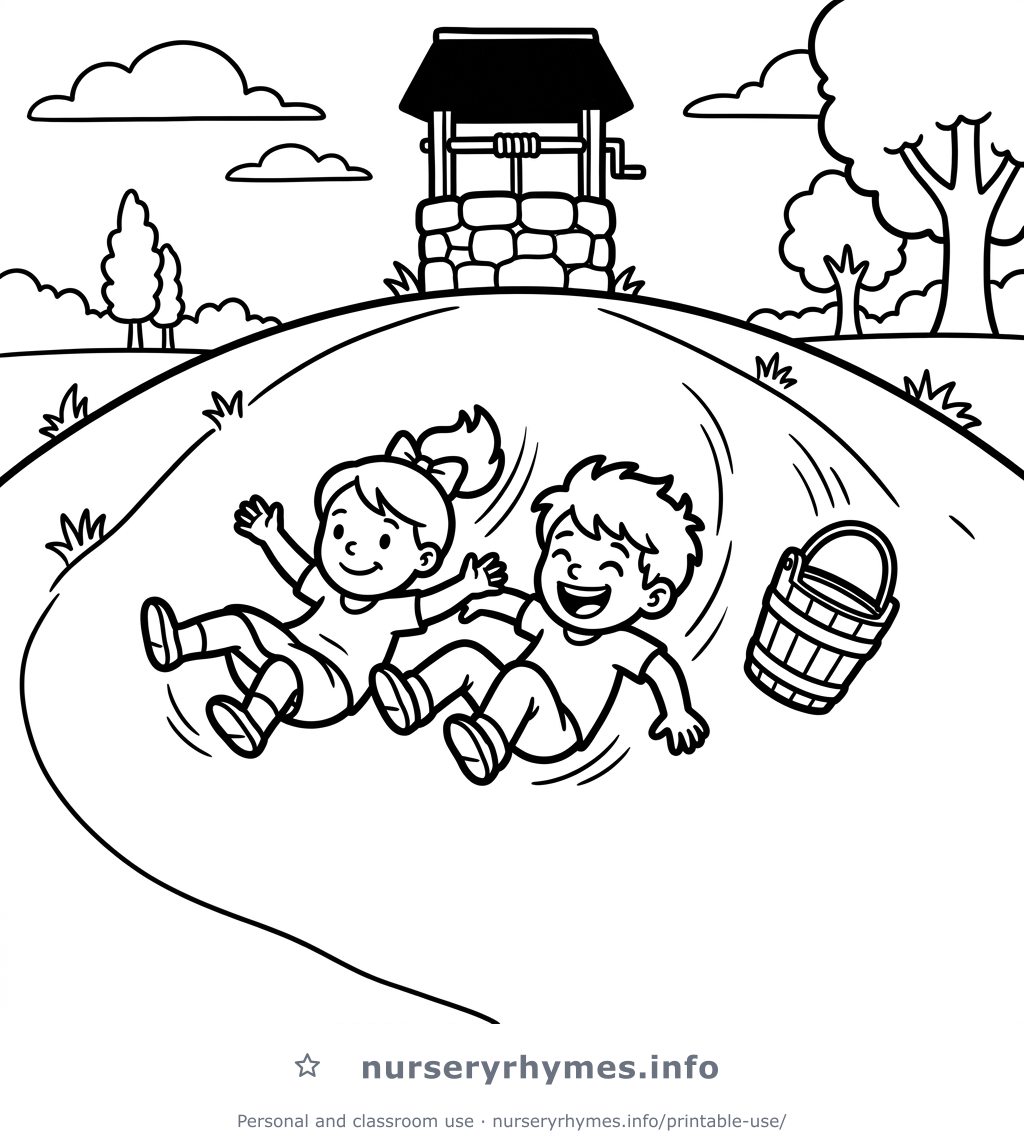
Free Printable Coloring Page
Print this Jack and Jill coloring sheet for free and let little ones bring it to life with crayons or pencils.
Full-resolution PNG · Fits the paper size selected in your print dialog · Personal and classroom use
Related Nursery Rhymes


Lyrics from nurseryrhymes.info