

Antigonish


Lyrics
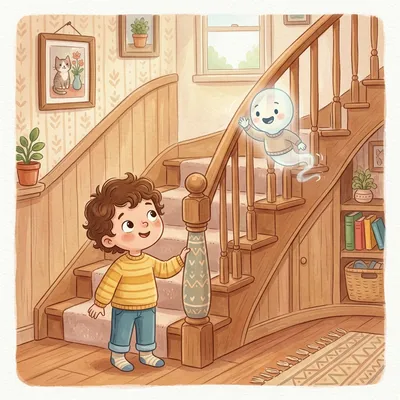
Yesterday, upon the stair,I met a man who wasn't there.He wasn't there again today,I wish, I wish he'd go away.
When I came home last night at three,The man was waiting there for me,But when I looked around the hall,I couldn't see him there at all!
History and Meaning
The poem has no title inside itself, which is why most people know it as "The Little Man Who Wasn't There" and libraries file it as "Antigonish". The name comes from a town in Nova Scotia where a house was reported to be haunted by a man nobody could see. Hughes Mearns read about it and turned the report into eight lines of very well-behaved nonsense.
Origins
Mearns wrote the verse in 1899 while a student, for a play called The Psyco-ed. It circulated for years before reaching print, and was published in 1922. Mearns was not a professional poet by trade. He became an educator, teaching at New York University, and wrote about creativity in children.
In 1939 the poem was set to music and recorded as "The Little Man Who Wasn't There", becoming a popular hit that year. The song is a separate work built on Mearns's words; the poem itself is the eight lines above.
Meaning & Interpretation
The poem runs on a contradiction it never resolves. You cannot meet a man who is not there, and the speaker keeps meeting him anyway. Every stanza restates the impossibility in a slightly different setting: the stair, the hall, last night at three.
What makes it unsettling rather than merely silly is the speaker's tone. He is not frightened or amazed. He is annoyed, and wishes the man would go away, which is an odd thing to want from someone who does not exist. Children tend to find it funny; adults tend to find it slightly eerie. Both readings are fair.
Why is the poem called "Antigonish"?
Antigonish is a town in Nova Scotia, Canada. Mearns based the verse on accounts of a haunted house there, where a ghostly man was said to be seen on the stairs. The poem never mentions the town, so the title works as a source note rather than a description.
Who wrote the man who wasn't there poem?
Hughes Mearns, an American writer and educator, wrote it in 1899 for a student play and published it in 1922. He is remembered almost entirely for these eight lines, though he spent his career teaching and writing about creative work in children.
Is Antigonish a children's poem or a ghost story?
It sits between the two, which is why it is anthologised in both kinds of book. The subject is a haunting, but nothing bad happens, there is no threat, and the joke is a word puzzle about presence and absence. Most children meet it as a funny poem to recite.
Related Nursery Rhymes




Lyrics from nurseryrhymes.info