
Jack Sprat


Lyrics
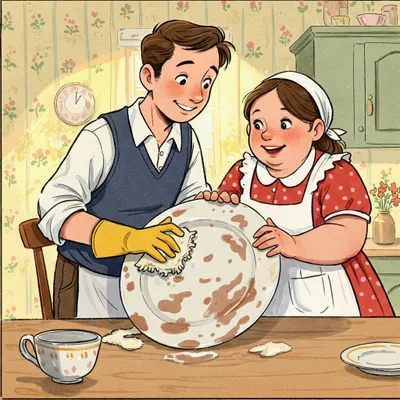
Jack Sprat could eat no fat,His wife could eat no lean.And so between them both, you see,They licked the platter clean.
History and Meaning
Jack Sprat could eat no fat and his wife could eat no lean, so between them they licked the platter clean. It reads as a tidy lesson about a well-matched couple, but the rhyme has also been pinned, unprovably, on a string of cash-strapped English kings.
What is the history of the rhyme Jack Sprat?
The origins of Jack Sprat can be traced back to the mid-seventeenth century as an English proverb. An early printed version appeared in John Clarke's collection of sayings in 1639, with a slightly different phrasing mentioning "Jack" and "Jull" together licking the dishes clean.
The saying gained widespread popularity as a nursery rhyme after its inclusion in Mother Goose's Melody around 1765. The name Jack Sprat itself was used in the sixteenth century to refer to people of small stature, and a "sprat" is also a type of small fish, perhaps suggesting someone insignificant or diminutive.
Who was the real Jack Sprat?
Historians have proposed two main theories about who might have inspired the character of Jack Sprat:
- King Charles I and Henrietta Maria: One popular interpretation suggests the rhyme is a veiled satire of King Charles I (reigned 1625 to 1649) and his wife, Queen Henrietta Maria. Charles was left financially "lean" when Parliament refused to fund his war against Spain. His wife, allegedly "eating no lean," helped fill the coffers by imposing war taxes after Charles dissolved Parliament. Together, they "licked the platter clean" by extracting money from the English people. King Charles I was known to be a short man, fitting the historical usage of "Jack Sprat" for small individuals.
- King John and Isabella: Another theory connects the rhyme to an earlier era, suggesting King John faced financial strains, including raising a hefty ransom for his brother Richard I ("the Lionheart"), while his wife Isabella (or Joan) was portrayed in some accounts as greedy, "eating all the fat." This interpretation ties the rhyme to the Robin Hood legends and medieval English politics.
Both stories remain popular folklore, though historians generally view the rhyme as starting as a simple proverb about complementary traits.
What is the moral meaning of Jack Sprat?
On the surface, the rhyme simply describes a couple whose different dietary preferences result in no food being wasted. This straightforward reading offers lessons about:
- Complementary differences: What one person does not want, another values.
- Partnership: Working together to achieve completeness.
- Avoiding waste: Ensuring nothing is left behind or thrown away.
Why has Jack Sprat remained popular for centuries?
Like many nursery rhymes, Jack Sprat works on multiple levels, serving as a simple children's verse about eating and as a potential commentary on historical figures. This richness has helped it endure for nearly four centuries.
Music Video
If the player is unavailable, watch this video on YouTube.
Related Nursery Rhymes



Lyrics from nurseryrhymes.info