

Bye, Baby Bunting
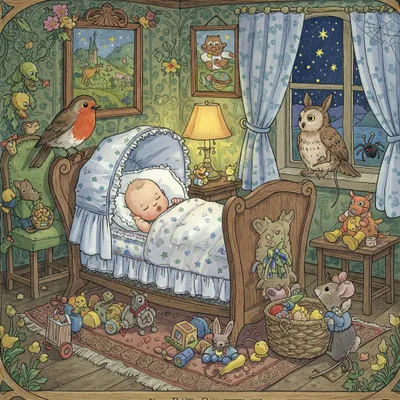


Lyrics
Bye, baby Bunting,Daddy's gone a-hunting,Gone to get a rabbit skinTo wrap the baby Bunting in.
History and Meaning
Bye, Baby Bunting is a traditional English lullaby and nursery rhyme. The short song describes a father who has gone hunting to collect a rabbit skin to wrap and warm his baby, creating a comforting bedtime theme.
The rhyme is widely sung to soothe infants to sleep. Over the centuries, several variations of the lyrics have emerged, adding details about other family members performing rural chores.
Origins
The earliest documented printed version of the rhyme was published in April 1731 in London's The Gentleman's Magazine. It appeared as a fragment in a satirical piece titled "A Nurse's Speech to an Alderman's Child."
The complete, familiar version of the song was later published in the 1784 nursery rhyme collection Gammer Gurton's Garland, or The Nursery Parnassus. By the early nineteenth century, the lyrics had expanded to describe the mother going milking and the sister going silking, reflecting the typical division of labor in historical English households.
Meaning & Interpretation
The term "bunting" is a traditional English term of endearment for a baby. It historically meant "plump" or "short," and was used affectionately to describe a healthy, well-fed infant.
The narrative focuses on maternal and paternal care. The father's hunt for a "rabbit skin" highlights the practical need to keep infants warm during cold winters in pre-industrial England. The later addition of the mother and siblings working emphasizes the family working together to support and nurture the newborn baby.
What does the word bunting mean in the lullaby?
In older English dialects, "bunting" was a term of endearment for a child, typically meaning "plump" or "chubby." It was also used to describe a warm wrapping or blanket, which fits the song's theme of keeping a baby warm.
When was Bye, Baby Bunting first printed?
A fragment of the lullaby was first printed in April 1731 in The Gentleman's Magazine. The complete, standard version of the nursery rhyme was later published in 1784 in the collection Gammer Gurton's Garland.
Music Video
If the player is unavailable, watch this video on YouTube.
Related Nursery Rhymes






Lyrics from nurseryrhymes.info