
All the Pretty Little Horses

Lyrics
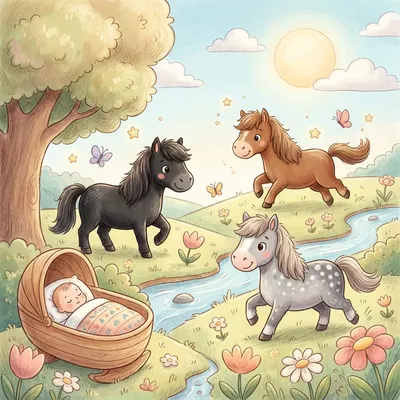
Hush-a-bye, don't you cry,Go to sleep, little baby.When you wake you shall haveAll the pretty little horses.Blacks and bays, dapples and grays,Coach and six little horses.Hush-a-bye, don't you cry,Go to sleep, little baby.
History and Meaning
"All the Pretty Little Horses" is a traditional American lullaby. Known for its soothing, gentle melody, the song has long been sung by parents and caregivers to settle infants to sleep with the promise of a coach and six horses in many colors.
Behind its calm surface, however, the song carries a historical context tied to the painful realities of the antebellum American South.
Origins
The exact author and date of composition are undocumented, as the song was passed down through oral tradition. It is widely recognized as a lullaby of African-American origin, dating back to the era of slavery. The earliest printed reference to the song's lyrics appeared in 1903 within a story by Maud McKnight Lindsay. Later, folklorist Dorothy Scarborough documented the song in her 1925 study On the Trail of Negro Folk-Songs, confirming it was sung by enslaved women.
Meaning & Interpretation
The primary lyrics describe a peaceful dream of owning beautiful horses of different colors, such as blacks, bays, and dappled grays. However, the song's history reveals a deeper sadness. Enslaved mothers were frequently forced to work as caretakers for the children of their enslavers, often leaving their own babies unattended or facing sale and separation. Some historical versions recorded by musicologists John and Alan Lomax in 1934 include a stark, tragic verse describing a neglected baby left in a field. In 1971, activist Angela Davis noted that the song highlights the grief of mothers who had to nurture other children while their own suffered.
What is the origin of All the Pretty Little Horses?
The lullaby originated in the oral traditions of enslaved African Americans in the southern United States. Its first printed fragments date to 1903, and it was formally documented in folklorist research in 1925.
Is All the Pretty Little Horses a slave lullaby?
Yes, historical evidence shows it was commonly sung by enslaved women caring for the children of their enslavers. The gentle promise of the song contrasts with the historical grief of mothers separated from their own infants.
Related Nursery Rhymes


Lyrics from nurseryrhymes.info