

Curly Locks
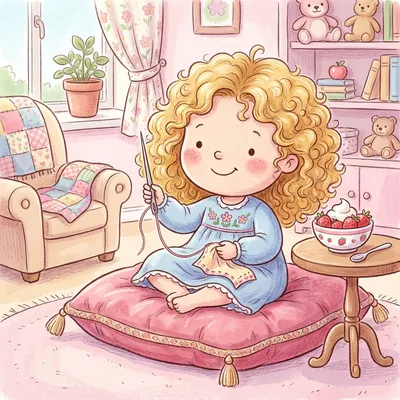
 1797
1797  England
 Lyrics
Curly Locks, Curly Locks,
Wilt thou be mine?
Thou shalt not wash dishes,
Nor yet feed the swine;
But sit on a cushion
And sew a fine seam,
And feed upon strawberries,
Sugar and cream.
Wilt thou be mine?
Thou shalt not wash dishes,
Nor yet feed the swine;
But sit on a cushion
And sew a fine seam,
And feed upon strawberries,
Sugar and cream.
History and Meaning
"Curly Locks" is a traditional English nursery rhyme that first appeared in print in 1797, though it may be older in origin.
Origins
The rhyme was first published in "Infant Institutes" (1797). It presents a suitor making an extravagant promise to a curly-haired maiden.
Meaning and Interpretation
The rhyme is essentially a marriage proposal:
- "Curly Locks" addresses a curly-haired girl
- "Wilt thou be mine?" is a proposal
- The suitor promises:
- No dish washing
- No feeding pigs
- Sitting on a cushion doing fine needlework
- Eating strawberries, sugar, and cream
These promises describe a life of luxury—no domestic drudgery, only refined activities and delicate foods.
Historical Context
In 18th-century England:
- Washing dishes and feeding pigs were common tasks for women of lower classes
- "Sewing a fine seam" was a genteel, ladylike pursuit
- Strawberries with cream was an upper-class delicacy
The suitor is essentially promising to elevate Curly Locks to a life of gentility.
Romantic Appeal
The rhyme has endured partly due to its romantic nature—the devoted suitor offering the moon to win his beloved. It captures the timeless theme of courtship and promises of a better life together.