

Four and Twenty Tailors


Lyrics
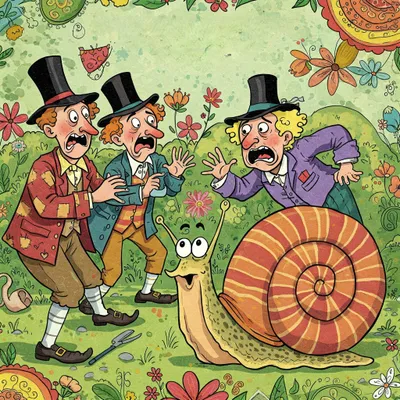
Four-and-twenty tailorsWent to kill a snail;The best man among themDurst not touch her tail;She put out her hornsLike a little Kyloe cow.Run, tailors, run, orShe'll kill you all just now.
History and Meaning
"Four and Twenty Tailors" is a traditional English nursery rhyme that humorously mocks the bravery of tailors. The song describes a group of twenty-four tailors who set out to defeat a snail, only to flee in terror when the tiny creature shows its horns.
Origins
The oldest printed version of this rhyme appears in James Orchard Halliwell's 1844 collection, The Nursery Rhymes of England. However, the trope of the cowardly tailor is much older. For example, Samuel Foote's 1767 theatrical production titled The Tailors highlights that this occupational stereotype was already a common joke in British culture. The specific mention of a "Kyloe cow," a breed of horned Highland cattle from Scotland, suggests the lyrics may have northern English or Scottish influences.
Meaning & Interpretation
The nursery rhyme is a work of pure satire. Historically, tailoring was viewed as sedentary work that did not require physical strength, leading to unfair stereotypes about tailors lacking courage. By showing twenty-four grown men panicking over a harmless garden snail, the song uses extreme exaggeration to make fun of this stereotype. The number "four and twenty" (twenty-four) was a standard poetic phrasing of the era, also famous from the rhyme Sing a Song of Sixpence.
What is the meaning of Four and Twenty Tailors?
The rhyme is a humorous satire mocking the historical stereotype of tailors as weak or cowardly. The humor comes from the absurdity of twenty-four grown men fleeing from a single garden snail.
When was Four and Twenty Tailors first published?
The rhyme was first published in 1844 by folklorist James Orchard Halliwell in his book The Nursery Rhymes of England. The joke itself is older, appearing in plays during the late eighteenth century.
Music Video
If the player is unavailable, watch this video on YouTube.
Lyrics from nurseryrhymes.info