

Go Tell Aunt Rhody
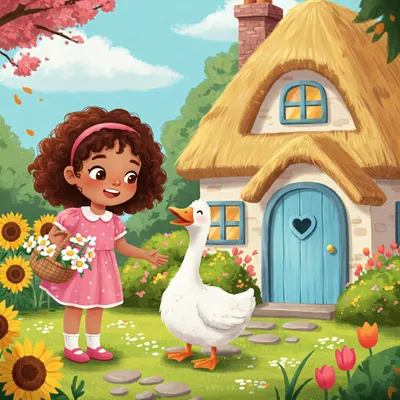


Lyrics
Go tell Aunt Rhody,Go tell Aunt Rhody,Go tell Aunt Rhody,The old grey goose is dead.
The one she's been saving,The one she's been saving,The one she's been saving,To make a feather bed.
She died in the mill pond,She died in the mill pond,She died in the mill pond,Standing on her head.
History and Meaning
"Go Tell Aunt Rhody" is a traditional folk song and nursery rhyme. Famously sung as a lullaby and play-party song in North America, the tune tells the story of a household's grief over the loss of their prized old gray goose.
Origins
The song's history connects European classical music with American folklore. The melody was composed by Geneva-born philosopher and composer Jean-Jacques Rousseau in 1752. It was originally a gavotte in his popular one-act opera Le devin du village (The Village Soothsayer). The tune migrated to the United States in the early nineteenth century, where it was published in hymnals under names like "Greenville." Over time, the tune became associated with the folk lyrics about Aunt Rhody, cataloged under Roud Folk Song Index number 3346.
Meaning & Interpretation
The lyrics describe the death of a gray goose, which died in a mill pond while standing on its head. The song explains that the goose was being saved by Aunt Rhody to make a comfortable feather bed, and notes the sadness of the gander and goslings left behind. The song reflects the practicalities of historical rural life, where animals were highly valued resources.
The song's simple, stepwise melody has made it a popular choice for beginner music students. It is famously included as one of the first songs taught to young children learning the violin through the Suzuki method.
Who composed the melody of Go Tell Aunt Rhody?
The melody was composed by philosopher Jean-Jacques Rousseau in 1752 for his opera Le devin du village. The tune was later adapted into the popular American folk song.
What is the meaning of the song Go Tell Aunt Rhody?
The song is a simple, melancholic farm story about the loss of a valuable goose. It reflects the historical value of geese, which were kept for both food and feathers to make warm bedding.
Music Video
If the player is unavailable, watch this video on YouTube.
Lyrics from nurseryrhymes.info