

Grandfather's Clock


Lyrics
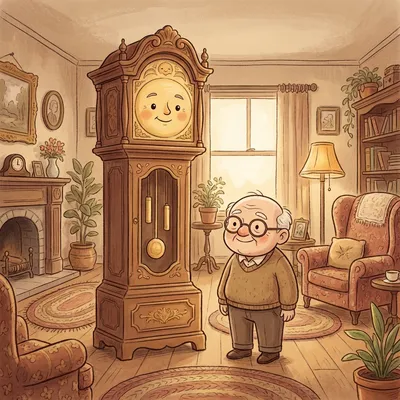
My grandfather's clock was too large for the shelf,So it stood ninety years on the floor;It was taller by half than the old man himself,Though it weighed not a pennyweight more.It was bought on the morn of the day that he was born,And was always his treasure and pride;But it stopped short, never to go again,When the old man died.
Ninety years without slumbering(tick, tock, tick, tock),His life seconds numbering,(tick, tock, tick, tock),It stopped short, never to go again,When the old man died.
History and Meaning
Before 1876, the tall pendulum clocks that stood in hallways were called longcase or tall-case clocks. Then Henry Clay Work wrote a song about one, and the English-speaking world started calling them grandfather clocks instead. Few nursery songs can claim to have changed the dictionary.
A grandchild narrates the ballad. The clock is bought the morning the grandfather is born, keeps time at his side for ninety years, and stops the instant he dies, its pendulum standing in for his heartbeat.
Origins
Henry Clay Work wrote both words and music in 1876, drawing on a story he picked up the year before at the George Hotel in Piercebridge, North Yorkshire. In the lobby stood a broken longcase clock built by James Thompson. Staff told Work it had belonged to two brothers named Jenkins. It began losing time when the first brother died, they said, and stopped for good when the second died at ninety. Work turned that local tale into a parlour ballad, and it sold more than a million copies of sheet music.
Meaning & Interpretation
The clock is the grandfather's life measured out in ticks. "Ninety years without slumbering" keeps it at his side from cradle to grave, and the sudden stop at his death lands all the harder for the steady ticking that came before it.
The song also left a mark on the language. These standing clocks had always been tall-case or longcase clocks. Within a few years of the song's release, people were calling them grandfather clocks, and the name stuck.
Who wrote the song Grandfather's Clock?
The song was written and composed by Henry Clay Work, a prominent American songwriter, in 1876. He wrote the lyrics after hearing a local legend about a stopped clock during a visit to North Yorkshire, England.
Why is it called a grandfather clock?
The term "grandfather clock" was coined because of the popularity of Henry Clay Work's 1876 song. Before the song became a hit, these devices were called longcase or tall-case clocks, but the public renamed them after the clock in the ballad.
Lyrics from nurseryrhymes.info