
Nani Teri Morni
 India
India Hindi Nursery Rhyme
Original Lyrics
नानी तेरी मोरनी को मोर ले गए,
बाकी जो बचा था काले चोर ले गए।
Romanized (Latin script):
Nani teri morni ko mor le gaye,
Baaki jo bacha tha kaale chor le gaye.
English Translation
Whatever was left, the black thieves took away.
Translation Notes
Translation
नानी (Nani) = Grandma (maternal grandmother)
तेरी (teri) = your
मोरनी (morni) = peahen (female peacock)
को (ko) = (object marker)
मोर (mor) = peacock (male)
ले गए (le gaye) = took away
बाकी (baaki) = remaining/leftover जो (jo) = which/that बचा था (bacha tha) = was left/saved काले (kaale) = black चोर (chor) = thieves
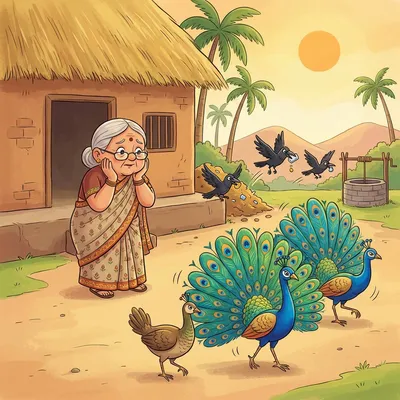
This playful rhyme tells a humorous story about Grandma's peahen being taken by peacocks, and then thieves stealing what remained. It's a popular children's song in India with a catchy tune.
History and Meaning
"Nani Teri Morni" (नानी तेरी मोरनी) is a playful and beloved Hindi nursery rhyme that has entertained Indian children for generations. The title translates to "Grandma, Your Peahen," and the song tells a humorous story about a grandmother whose peahen is taken away.
The rhyme features peacocks (मोर/mor) and peahens (मोरनी/morni), birds that hold special significance in Indian culture. The peacock is India's national bird and is celebrated in Indian art, literature, and folklore for its beauty and grace.
The song's narrative about things being taken away - first by the peacocks, then by thieves - creates a playful sense of loss and drama that children find amusing. The rhyme often continues with additional verses describing the thieves' capture and punishment, teaching children about consequences in a lighthearted way.
Like many traditional Hindi bal geet (children's songs), "Nani Teri Morni" has been passed down orally through generations, with various regional versions and extended verses. Its simple vocabulary, repetitive structure, and catchy melody make it easy for young children to learn and remember, while also building their Hindi language skills.
The song remains popular in Indian schools, homes, and children's programs, continuing to bring joy to new generations while connecting them to traditional Hindi children's culture.