
How Many Miles to Dublin?


Lyrics
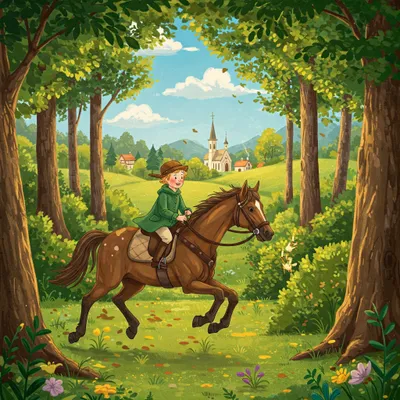
Hupp, hupp my little horse, hupp, hupp again sir.How many miles to Dublin? Three score and ten sir,Will we be there by candle light? Yes sir and back sir.
History and Meaning
"How Many Miles to Dublin?" is a traditional Irish nursery rhyme and hand-clapping or knee-bouncing game. Typically sung by parents while bouncing a toddler on their knee, this short rhyme mimics the rhythmic trot of a horse traveling toward the Irish capital city.
The chant is highly interactive, concluding with a sudden drop or lift that usually makes children laugh.
Origins
This verse is a regional Irish variant of a much older British rhyme, "How Many Miles to Babylon?" The parent rhyme was first recorded in print in 1801 in Songs for the Nursery. While the English version asks about Babylon or London, the Irish version substituted Dublin to make the travel destination familiar to local children. In Scotland, the rhyme often referenced Banbury or Hebron instead.
Meaning & Interpretation
The lyrics evoke the slow pace of travel in the days before modern transportation. The mention of traveling by "candle light" refers to the practice of journeying late into the night or before dawn, using candles or lanterns to light the way. The interactive nature of the rhyme serves as a physical play song. The opening line encourages the child to pretend they are riding a horse, while the final line often coincides with the parent dropping the child between their knees to simulate the horse arriving or tripping, adding a physical element to the performance.
What is the origin of How Many Miles to Dublin?
The rhyme is a nineteenth-century Irish adaptation of the traditional English nursery rhyme "How Many Miles to Babylon," which was first printed in 1801. It was modified by Irish singers to feature their own capital city.
What does three score and ten mean?
The phrase "three score and ten" means seventy. A "score" is an old English term for twenty, so three scores equals sixty, and adding ten results in seventy. Historically, seventy years was also considered a standard human lifespan.
Music Video
If the player is unavailable, watch this video on YouTube.
Lyrics from nurseryrhymes.info