
Cuachán nan Craobh
 Ireland
 Irish Nursery Rhyme
Original Lyrics
Ná ceol na n-éan ar ghéaga
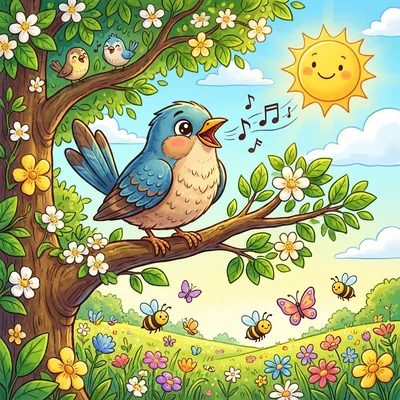
Tá samhradh ann is tá an ghrian ag taitneamh
Is tú ag canadh san fhéar fada
Cú cú, cú cú
Cú cú, cú cú
Cú cú, a chuach bhig
Tá an samhradh ar ais arís
Éist leis an gcuach sa choill ghlas
Ag fógairt dúinn go bhfuil an t-earrach ann
Ní fada go mbeidh na bláthanna ag fás
Agus na héin ag canadh gach lá
English Translation
Than the music of birds on the boughs
It's summer and the sun is shining
And you're singing in the long grass
Cuckoo, cuckoo
Cuckoo, cuckoo
Cuckoo, little cuckoo
Summer is back again
Listen to the cuckoo in the green wood
Announcing to us that spring is here
It won't be long until the flowers are growing
And the birds are singing every day
Translation Notes
Grammar Notes
Comparatives (An Breischéim) Irish forms comparatives using the copula "is": - binn (sweet, melodious) → is binne (is sweeter) - mór (big) → is mó (is bigger) - Structure: is binne X ná Y = X is sweeter than Y
Plural Genitives Plural nouns in the genitive case are often eclipsed: - na héin (the birds, nominative) → na n-éan (of the birds, genitive with eclipsis) - na craobha (the branches) → nan craobh (of the branches, genitive plural)
Lenition After Prepositions Certain prepositions cause lenition: - ar + géaga → ar ghéaga (on branches) - do + guth → do ghuth (your voice)
Vocabulary
Cuach/Cuachán = Cuckoo (cuachán is a diminutive, "little cuckoo") Craobh = Branch, tree (plural: craobha) Guth = Voice Binn = Sweet, melodious, harmonious Binne = Sweeter (comparative form) Ceol = Music Éan = Bird (plural: éin in nominative, éan in genitive) Géag = Branch (plural: géaga) An t-earrach = Spring (the season) An samhradh = Summer An chuach = The cuckoo (lenited form) Scairbhín na gCuach = The rough weather of the cuckoo (late spring storms) Arís = Again Cú cú = Onomatopoeia for cuckoo's call
History and Meaning
"Cuachán nan Craobh" (Cuckoo of the Grove/Branches) is a song celebrating the cuckoo bird and its role as nature's herald of spring and summer. While the specific song "Cuachag nan Craobh" is actually Scottish Gaelic in origin (composed by William Ross around 1782), the cuckoo holds equally powerful significance in Irish folklore and tradition, and variations of cuckoo songs appear throughout Irish and Celtic cultures.
Origins
The cuckoo (an chuach in Irish) has been celebrated in Irish and Celtic tradition for millennia, appearing in ancient poetry, folklore, and seasonal songs. The bird's distinctive call—often rendered as "cú cú" in Irish—signals the end of winter and the beginning of the warmer seasons, making it one of nature's most reliable and eagerly awaited harbingers of change.
Irish nature poetry and songs frequently feature birds, reflecting the close connection between the Irish people and their natural environment. The cuckoo appears in ancient Irish bardic verse and medieval Irish poetry, praised for its voice and its role as nature's messenger. Many Irish children's songs and folk songs celebrate the cuckoo, teaching children to recognize its call as a sign that summer is approaching.
The cuckoo typically arrives in Ireland in April and departs by late summer (usually July), making it a precise seasonal marker. Traditional Irish folk wisdom captured this in the verse: "The cuckoo comes in April, she sings her song in May, then in June another tune, and in July she flies away."
Meaning & Interpretation
Songs about the cuckoo fundamentally celebrate the arrival of spring and the promise of summer—the seasons of growth, abundance, and relative ease after the hardships of winter. For agricultural communities, the cuckoo's arrival coincided with critical farming activities like sowing crops, the greening of pastures for grazing, and the awakening of nature after winter dormancy.
The comparison of the cuckoo's voice to other birdsong—often declaring it sweeter than all other birds ("is binne do ghuth ná ceol na n-éan")—reflects both genuine appreciation for the bird's melodious call and its symbolic importance as the voice of summer itself. The cuckoo's song represents hope, renewal, transformation, and the cyclical nature of the seasons.
Children learning cuckoo songs develop observational skills, connecting the auditory signal (the bird's call) with seasonal change and natural cycles. This kind of phenological knowledge—understanding nature's seasonal patterns—was essential in traditional Irish agricultural society and remains valuable for fostering environmental awareness.
Cultural Significance and Folklore
Irish folklore surrounding the cuckoo is remarkably rich and specific, with many beliefs and superstitions attached to hearing its first call of the year:
Omens of Luck and Prosperity: - Having money in your pocket when first hearing the cuckoo would ensure prosperity for the year ahead - You should turn over any coins in your pocket when you first heard the cuckoo to ensure continued wealth - Hearing the cuckoo's call in your right ear was considered lucky, while hearing it in the left ear was unlucky - However, hearing the cuckoo before eating breakfast, or while still in bed, was considered an ill omen
Health and Longevity: - Being in good health when you heard the first cuckoo's call indicated continued good health throughout the year - Finding a white hair at your feet upon hearing the cuckoo for the first time suggested long life and grey hair in old age
Weather and Farming Wisdom: - The cuckoo's arrival often preceded a period called "Scairbhín na gCuach" (the rough weather of the cuckoo), typically lasting from mid-April to mid-May, when late spring storms might occur - Farmers who hadn't sown their crops by the time the cuckoo arrived were sometimes called "cuckoo farmers," implying they were lazy or behind schedule - If the cuckoo sang from a bare thorn bush, it was a warning to "sell cattle and buy corn," indicating a poor harvest ahead
Other Irish Cuckoo Songs
Several traditional Irish songs feature the cuckoo, each with different themes:
- "Cuach Mo Lon Dubh Buí" (Cuckoo of My Yellow Blackbird): Explores themes of loss and longing
- "The Cuckoo of Glen Nephin": Focuses on unrequited love set against the Irish landscape
- "The Bonny Cuckoo": Welcomes the cuckoo as a harbinger of spring and wishes for its year-long presence
These songs demonstrate how the cuckoo transcended simple natural observation to become a powerful symbol in Irish emotional and cultural expression.
Educational Value
Cuckoo songs teach children:
- Seasonal awareness: Recognizing natural signs of seasonal change
- Observation skills: Connecting bird calls with specific species and times of year
- Cultural heritage: Understanding traditional Irish folklore and agricultural wisdom
- Environmental connection: Developing appreciation for nature's cycles
- Musical mimicry: The simple "cú cú" sounds make the song perfect for young children to learn and perform
The simple melody and repetitive "cú cú" sounds make cuckoo songs ideal for young children, both as fun musical mimicry and as an introduction to Irish nature lore.