
John Jacob Jingleheimer Schmidt
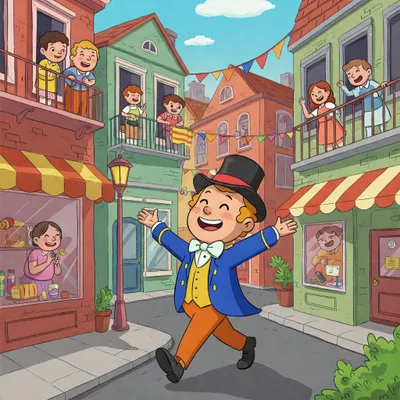
 Late 19thCentury
  USA
USA Lyrics
His name is my name too
Whenever I go out
The people always shout
"There goes John Jacob Jingleheimer Schimdt
Da da-da da-da da-da da"
History and Meaning
"John Jacob Jingleheimer Schmidt" is a traditional American children's song featuring a comically long nonsense name that has been a staple of summer camps, school buses, and family gatherings for generations.
Origins
The exact origin of "John Jacob Jingleheimer Schmidt" is unknown, but it is believed to have emerged in the United States in the early 20th century. The song appears to be a uniquely American creation, combining elements of German-American immigrant culture (the German-sounding name) with the American tradition of participatory camp songs.
The Song's Structure
The song is notable for its unusual structure:
- The lyrics are almost entirely repetitive, consisting mainly of the name itself
- Each repetition is sung slightly softer than the last
- On the final repetition, the song suddenly gets loud again
- This creates a game-like element that children find endlessly entertaining
The Nonsense Name
The name "John Jacob Jingleheimer Schmidt" is an elaborate, deliberately absurd construction:
- John Jacob: Common American first and middle names
- Jingleheimer: A fanciful, made-up element suggesting something whimsical
- Schmidt: A very common German surname, grounding the absurdity in reality
The joke of the song is that "my name" is the same as "your name," creating a playful sense of shared identity among all the singers.
Camp Song Tradition
The song became firmly established in American summer camp culture by the mid-20th century. Its qualities make it ideal for camp settings:
- Easy to learn: The repetitive lyrics require no memorization
- Interactive: The volume changes keep children engaged
- Participatory: Everyone can join in immediately
- Energetic: The final loud repetition releases energy in a controlled way
Variations and Adaptations
Over the years, the song has been adapted in various ways:
- Some versions include hand motions or actions
- Others add additional verses or variations
- The song is sometimes used as a warm-up or ice-breaker activity
Cultural Impact
"John Jacob Jingleheimer Schmidt" has become deeply embedded in American childhood culture. It's often one of the first songs children learn at camp or school, and many adults have fond memories of singing it on bus rides or around campfires. The song represents the joy of communal singing and the pleasure of shared silliness.