
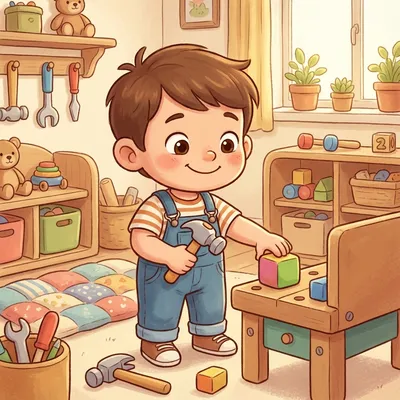
Johnny Works With One Hammer

Lyrics
Johnny works with one hammer,One hammer, one hammer,Johnny works with one hammer,Then he works with two.
Johnny works with two hammers,Two hammers, two hammers,Johnny works with two hammers,Then he works with three.
Johnny works with three hammers,Three hammers, three hammers,Johnny works with three hammers,Then he works with four.
Johnny works with four hammers,Four hammers, four hammers,Johnny works with four hammers,Then he works with five.
Johnny works with five hammers,Five hammers, five hammers,Johnny works with five hammers,Then he goes to sleep!
Actions:
One hammer = one fist poundingTwo hammers = both fists poundingThree hammers = both fists and one footFour hammers = both fists and both feetFive hammers = fists, feet, and head nodding
History and Meaning
"Johnny Works With One Hammer" starts with one fist pounding and keeps adding limbs: two fists, then a foot, then both feet, then a nodding head, until the child is hammering with their whole body, and finally collapses to sleep. The build-up to exhaustion, and the calm ending, is the whole point.
How do you perform the actions for Johnny Works with One Hammer?
The song is performed with cumulative physical movements corresponding to each verse:
- One hammer: Pound one fist on your knee or lap.
- Two hammers: Pound both fists on your lap.
- Three hammers: Pound both fists and tap one foot on the floor.
- Four hammers: Pound both fists and tap both feet on the floor.
- Five hammers: Pound both fists, tap both feet, and nod your head.
- Go to sleep: Rest your head on your hands and remain quiet.
What is the educational value of Johnny Works with One Hammer?
The song is highly regarded by educators for its cognitive and physical benefits:
- Counting Skills: Children practice counting sequentially from one to five.
- Coordination and Motor Skills: Cumulative actions require children to maintain multiple movements simultaneously, which builds motor skills and coordination.
- Self-Regulation: The final transition from intense activity to falling "asleep" helps children learn to calm their bodies, making it a perfect tool before quiet time or during lesson transitions.
Related Nursery Rhymes



Lyrics from nurseryrhymes.info