
Little Robin Redbreast
 1744
1744  England
 Lyrics
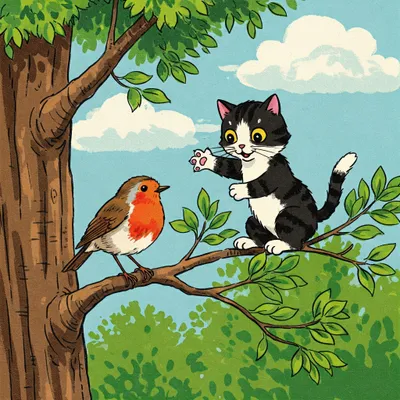
Sat upon a tree;
Up went Pussycat,
Down went he.
Down came Pussycat,
And away Robin ran;
Says little Robin Redbreast
"Catch me if you can."
Little Robin Redbreast
Hopped upon a wall;
Pussycat jumped after him,
And almost got a fall.
Little Robin chirped and sang,
And what did Pussy say?
Pussycat said "Meow,"
and Robin flew away.
History and Meaning
"Little Robin Redbreast" is a traditional English nursery rhyme with its first recorded appearance in print in "Tommy Thumb's Pretty Song Book" in 1744, making the rhyme nearly three centuries old.
Evolution of the Rhyme
The rhyme has undergone significant changes over time, evolving from earlier, cruder versions to the more child-friendly renditions known today. The original 1744 version was quite different from modern versions and contained a scatological reference that was later edited out in 19th-century editions—a process known as "bowdlerization."
The familiar version involving the cat and robin chase, where the robin cleverly evades "Pussy-Cat," became prevalent in later adaptations.
The Chase Story
The rhyme is essentially a miniature chase story offering suspense without harm:
- The robin sits on a wall, spade, or tree
- The cat attempts to catch the robin
- The robin flies away with a taunt: "Catch me if you can!"
This playful narrative, where the quick-witted bird escapes danger, explains why these lighter versions endured and became popular with children.
Symbolism of Robin and Cat
The inclusion of the robin and cat reflects their common presence in English gardens:
-
The Robin: Holds a special place in English tradition, often romanticized for its cheerful song and distinctive red breast. Robins are sometimes seen as symbols of benevolence and protection in British folklore. The European robin was given the human name "Robin" as an endearing practice.
-
The Cat: Often symbolizes domestic threats to small birds in European folklore. The cat lurking in the garden, ready to pounce, represents ever-present danger.
A Fingerplay Song
"Little Robin Redbreast" has been widely used as a fingerplay, allowing children to act out the movements of the robin and cat with their hands:
- One hand represents the robin, perching and hopping
- The other represents the prowling cat
- The chase can be acted out with fingers "flying" away
This turns the rhyme into an interactive performance that develops fine motor skills and imaginative play.
Cultural Significance
The European robin (Erithacus rubecula) is deeply embedded in British culture. It appears on Christmas cards, in folk songs, and throughout English literature. This simple nursery rhyme celebrates one of Britain's most beloved birds while teaching children about the natural world of the garden.