

Matthew, Mark, Luke and John
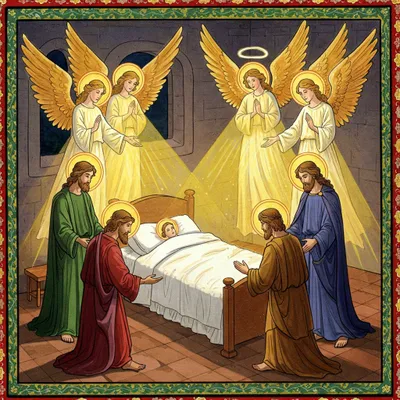
 1656
1656  Britain
 Lyrics
Bless the bed that I lie on.
Four corners to my bed,
Four angels round my head;
One to watch and one to pray
And two to bear my soul away.
History and Meaning
"Matthew, Mark, Luke and John" is a traditional English nursery rhyme and bedtime prayer, also known as the "Black Paternoster," with roots potentially stretching back to ancient protective prayers.
Ancient Origins
The prayer has remarkably deep roots. A similar medieval Jewish prayer invoking angels for protection during sleep exists, and connections have been drawn to ancient Babylonian prayers for nighttime protection. A Christian version was in use in late Medieval Germany before appearing in English.
Early English Records
The earliest known English version dates to the mid-16th century. The rhyme was explicitly recorded in Thomas Ady's 1656 witchcraft treatise, "A Candle in the Dark," where it was referred to as a "popish charm" used by a woman for blessing her bed.
Early English Protestant writers sometimes regarded such verses with suspicion, labeling them as "popish" (Catholic) or magical in nature.
Evolution of the Lyrics
The rhyme has evolved significantly over the centuries:
- 1656 (Ady's version): "Matthew, Mark, Luke and John, The Bed be blest that I lye on"
- 1686 (Aubrey's version): Added the "blessed Guardian-Angel" to keep the sleeper safe
- 1891 (Baring-Gould's version): The form most commonly known today, with "Four corners to my bed, Four angels round my head"
The Four Evangelists
The rhyme invokes Matthew, Mark, Luke, and John—the four Evangelists credited with writing the Gospels of the New Testament. By invoking their names, the prayer calls upon their spiritual protection for the sleeping child.
A Darker Interpretation
While generally seen as a comforting bedtime prayer, some modern readers note that the final lines can seem unexpectedly somber. The words "two to bear my soul away" implicitly acknowledge mortality, asking for protection not just in sleep but potentially in death.
Connection to Other Prayers
The rhyme is connected to older "Green Paternoster" and "White Paternoster" prayers from medieval England—protective charms recited before sleep that mixed Christian and folk elements.
Enduring Use
Despite its complex origins as something between prayer and protective charm, "Matthew, Mark, Luke and John" has remained popular as a simple, comforting bedtime prayer for children. Its invocation of angels watching over the sleeper continues to provide reassurance at the end of the day.