

Michael Finnegan
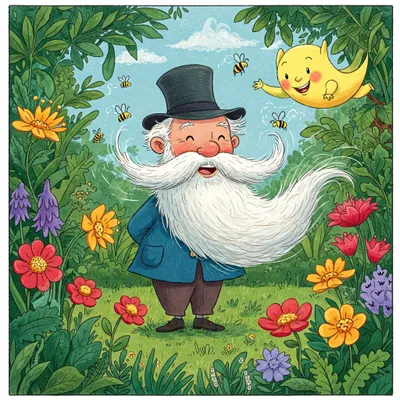
 Mid-19th Century
  Ireland / USA
 Lyrics
There was an old man named Michael Finnegan,
He grew whiskers on his chin-ne-gan.
The wind came up and blew them in again,
Poor old Michael Finnegan, begin again.
There was an old man named Michael Finnegan,
He went fishing with a pin-ne-gan.
Caught a fish but dropped it in again,
Poor old Michael Finnegan, begin again.
There was an old man named Michael Finnegan,
Climbed a tree and barked his shin-ne-gan.
Took off several yards of skin-ne-gan,
Poor old Michael Finnegan, begin again.
History and Meaning
"Michael Finnegan" is a traditional children's folk song known for its endless, cyclical structure that encourages singers to "begin again" indefinitely.
Origins
While the precise origins of "Michael Finnegan" are unknown, the character's Irish-sounding name and the song's widespread popularity in Irish folk traditions suggest potential Irish influences. The song is often performed to a lively polka rhythm that adds to its cheerful, energetic character.
First Printed Appearance
The earliest documented appearance of the song in print dates to "The Hackney Scout Song Book" in 1921, suggesting it was well-established in the scouting and camp song tradition by the early 20th century. It was subsequently featured in "The Oxford Song Book, Vol. 2" in 1927.
Musical Connection
The melody of "Michael Finnegan" bears a resemblance to another well-known children's song, "Here We Go Round the Mulberry Bush," though each song has developed its own distinct character and performance tradition.
A Perpetual Song
"Michael Finnegan" is classified as an "unboundedly long song" or "perpetual song" due to its deliberately cyclical structure. Each verse recounts a short, often humorous misfortune befalling the character, concluding with the refrain:
"Poor old Michael Finnegan, begin again!"
This structure invites singers to create new verses and continue the song indefinitely—or at least until everyone is exhausted from singing.
Classic Verses
The most popular verse involves Michael's unfortunate whiskers:
"There was an old man named Michael Finnegan, He grew whiskers on his chin-negan, The wind came up and blew them in again, Poor old Michael Finnegan, begin again!"
Other verses describe Michael growing thin, going fishing, and various other misadventures—all ending with the prompt to "begin again."
Camp Song Tradition
Like many perpetual songs, "Michael Finnegan" became a staple of summer camps, scout meetings, and children's music programs. Its qualities make it ideal for group singing:
- Easy to learn: The repetitive structure and rhyme scheme are immediately memorable
- Participatory: Anyone can join in quickly
- Cumulative energy: The endless repetition builds excitement and silliness
- Creative expansion: Singers can invent new verses
Educational Value
Beyond entertainment, the song helps children develop:
- Rhyming skills (the creative "-negan" rhymes)
- Memory and pattern recognition
- Group singing and timing
- Creative thinking through verse invention