

Miss Mary Mack


Lyrics
(Often performed as a hand-clapping game)
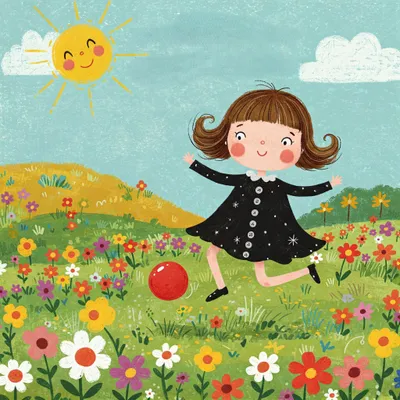
Miss Mary Mack, Mack, MackAll dressed in black, black, blackWith silver buttons, buttons, buttonsAll down her back, back, back.
She asked her mother, mother, motherFor fifty cents, cents, centsTo see the elephants, elephants, elephantsJump over the fence, fence, fence.
They jumped so high, high, highThey reached the sky, sky, skyAnd didn't come back, back, back'Til the Fourth of July, 'ly, 'ly!(Sometimes ends: 'Til the middle of July, 'ly, 'ly!)
History and Meaning
"Miss Mary Mack" is probably the most-clapped rhyme on the playground, its tripled words ("Mack, Mack, Mack") falling neatly on the claps. Miss Mary, dressed in black with silver buttons down her back, begs fifty cents to watch the elephants jump the fence, and they leap so high they stay gone until the Fourth of July.
Origins
The song has deep roots in African-American oral culture. While it was sung in communities in the Southern United States during the late nineteenth century, the earliest documented version appeared in print in 1888. Folklorist Henry Carrington Bolton recorded the rhyme in his book The Counting-Out Rhymes of Children, collecting it from children in West Chester, Pennsylvania. The song's repetitive, rhythmic cadence shows strong connections to traditional African call-and-response musical patterns.
Meaning & Interpretation
The lyrics tell a whimsical story about Miss Mary Mack, dressed in black with silver buttons down her back, who asks her mother for fifty cents to see elephants jump over a fence. The elephants jump so high that they do not return until the Fourth of July.
Folklorists and historians have proposed several interpretations of the lyrics. A popular theory connects the song to the American Civil War, suggesting that "Miss Mary Mack" refers to the Confederate ironclad warship, the CSS Merrimack (often spelled Merrimac), and the black dress and silver rivets represent the ship's hull. However, most historians view this theory as speculative. The song is generally understood as a playful folk creation designed to accompany hand-clapping games. The physical play, which requires coordination and cooperative rhythm, helps children develop fine motor skills and social interaction.
What is the history of Miss Mary Mack?
The rhyme is a traditional African-American clapping game. It was first documented in print in 1888 by Henry Carrington Bolton, who recorded a version collected in Pennsylvania.
Why are there elephants in Miss Mary Mack?
The reference to elephants jumping over a fence is a whimsical folk narrative designed to amuse children. Some historians suggest it might be inspired by nineteenth-century traveling circuses that featured performing elephants.
Music Video
If the player is unavailable, watch this video on YouTube.
Lyrics from nurseryrhymes.info