

Miss Mary Mack
 Late 19th Century
  USA
USA Lyrics
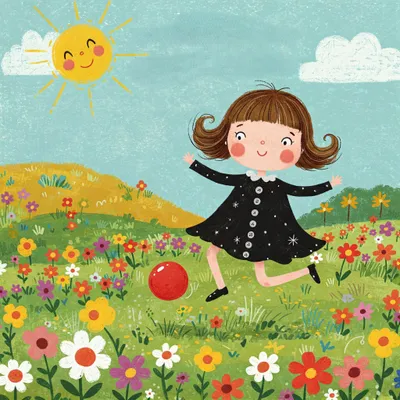
Miss Mary Mack, Mack, Mack
All dressed in black, black, black
With silver buttons, buttons, buttons
All down her back, back, back.
She asked her mother, mother, mother
For fifty cents, cents, cents
To see the elephants, elephants, elephants
Jump over the fence, fence, fence.
They jumped so high, high, high
They reached the sky, sky, sky
And didn't come back, back, back
'Til the Fourth of July, 'ly, 'ly!
(Sometimes ends: 'Til the middle of July, 'ly, 'ly!)
History and Meaning
"Miss Mary Mack" is a popular American clapping game and nursery rhyme with roots in African American folk culture, dating back to at least the late 19th century.
Origins
The exact origins of "Miss Mary Mack" are unknown, but it is believed to have emerged from African American communities in the Southern United States, likely in the decades following the Civil War. The song combines elements of African musical traditions (call-and-response, rhythmic complexity) with American folk culture.
The Silver Buttons Imagery
The most distinctive feature of the rhyme is its memorable description of Miss Mary Mack:
"Miss Mary Mack, Mack, Mack, All dressed in black, black, black, With silver buttons, buttons, buttons, All down her back, back, back."
Civil War Theories
Some historians have suggested the song may contain veiled references to the American Civil War:
- "Miss Mary Mack" could refer to the Merrimack, a famous Confederate ironclad warship
- "Dressed in black" might reference mourning during the war
- "Silver buttons" could symbolize military uniforms
- The elephants "jumping so high" might refer to cannons or battle
However, these connections remain speculative, and the song may simply be a playful folk creation with no hidden meaning.
Clapping Game Tradition
"Miss Mary Mack" is primarily performed as a clapping game, with two or more participants facing each other and performing increasingly complex hand-clapping patterns while singing. The rhythmic repetitions (Mack, Mack, Mack) align perfectly with the clapping movements.
The clapping patterns can become quite elaborate, with skilled players adding in additional moves like patting knees, snapping fingers, or crossing hands.
The Elephant Narrative
The later verses tell a whimsical story:
- Mary asks her mother for fifty cents
- She wants to see the elephants jump over the fence
- The elephants jump so high they reach the sky
- They don't come back until the Fourth of July
This surreal narrative adds to the song's playful charm.
Cultural Spread
"Miss Mary Mack" spread from African American communities to become one of the most widely known clapping games in the United States and beyond. It has been featured in children's books, educational materials, and popular culture.
Educational Value
The game develops:
- Coordination and rhythm: The clapping patterns build motor skills
- Memory: Learning the complex lyrics and movements
- Social interaction: Cooperative play between partners
- Cultural connection: Participation in a longstanding folk tradition