
Once I Saw a Little Bird
 1874
1874  England
 Lyrics
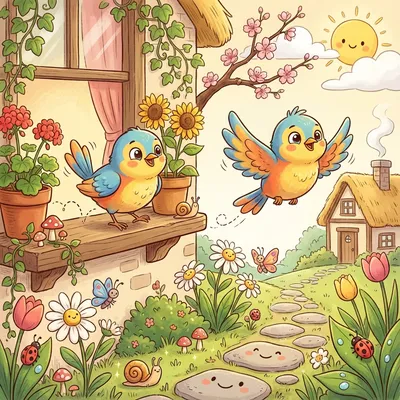
Once I saw a little bird
Come hop, hop, hop;
So I cried, "Little bird,
Will you stop, stop, stop?"
And was going to the window
To say, "How do you do?"
But he shook his little tail,
And far away he flew.
Come hop, hop, hop;
So I cried, "Little bird,
Will you stop, stop, stop?"
And was going to the window
To say, "How do you do?"
But he shook his little tail,
And far away he flew.
History and Meaning
"Once I Saw a Little Bird" is a charming Victorian-era nursery rhyme that captures a child's innocent attempt to befriend a wild bird.
Origins
The rhyme was first published in 1874 in England. It appears in various nursery rhyme collections from the Victorian period, though its exact author remains unknown, as is common with many folk rhymes of this era.
Meaning and Interpretation
The rhyme tells a simple but relatable story:
- A child spots a hopping bird
- They try to communicate with it
- The bird, being wild, flies away
This reflects a universal childhood experience of wanting to connect with nature. The rhyme gently teaches children that wild creatures are independent and cannot be tamed simply by asking them to stop.
Educational Value
The rhyme is particularly useful for:
- Teaching children about wildlife and respecting animals' freedom
- Introducing the concept that not everything in nature can be controlled
- Building vocabulary with action words like "hop," "stop," and "flew"
- Creating opportunities for movement and role-playing