

One for Sorrow


Lyrics
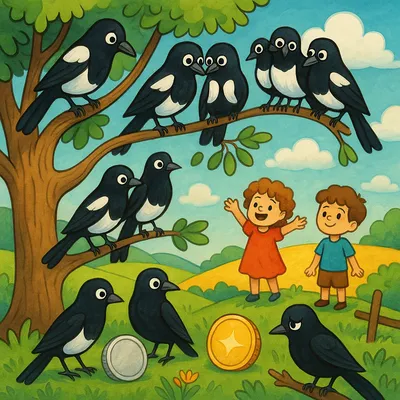
One for sorrow,Two for joy,Three for a girl,Four for a boy,Five for silver,Six for gold,Seven for a secret never to be told.
History and Meaning
Spot one magpie and you are in for sorrow; spot two and it is joy. "One for Sorrow" turns the number of magpies you see into a forecast of your luck, running up through silver, gold, and a secret never to be told. The superstition behind it is genuinely old, and some people still greet a lone magpie to head off the bad luck.
Origins
The custom of predicting the future by counting magpies dates back to ancient times, a practice known as ornithomancy. The earliest documented printed version of the rhyme appeared in 1780 in a supplement to Samuel Johnson and George Steevens' edition of The Plays of William Shakespeare. The text read: "One for sorrow, Two for mirth, Three for a wedding, Four for death." Over the nineteenth and twentieth centuries, the rhyme evolved into several variants, with the modern version extending to seven lines.
Meaning & Interpretation
The superstition behind the rhyme focuses on the magpie, a bird historically viewed in Western Europe as a creature of ill omen. A single magpie is considered a sign of bad luck, which folklorists suggest is because magpies mate for life, so a lone bird may have lost its partner. To ward off the bad luck of seeing a single magpie, various traditions developed, such as saluting the bird or asking, "Good morning, Mr. Magpie, how is your lady?" to imply that a second bird is nearby. In contrast to Western beliefs, magpies are viewed in East Asian cultures as symbols of good luck and happiness.
What is the meaning of One for Sorrow?
The rhyme is a traditional English superstition chant used to predict a person's fortune based on the number of magpies they see. Each number from one to seven represents a different outcome, ranging from sorrow to secrets.
Why do magpies represent good or bad luck?
In European folklore, magpies have been viewed with suspicion due to their black-and-white plumage and scavenging habits. A single magpie represents bad luck, while seeing multiple magpies together is considered a sign of joy, weddings, or wealth.
Music Video
If the player is unavailable, watch this video on YouTube.
Lyrics from nurseryrhymes.info