

O Balão do João
 Portugal
 Portuguese Nursery Rhyme
Original Lyrics
Subiu para o céu
Veio a chuva
E o balão desceu
O João chorou
O balão fugiu
Foi para o céu
E nunca mais se viu
English Translation
Rose to the sky
The rain came
And the balloon came down
João cried
The balloon flew away
It went to the sky
And was never seen again
Translation Notes
Grammar Notes
This song uses simple past tense verbs throughout, making it excellent for teaching Portuguese past tense conjugations to young learners. The verbs follow a clear narrative structure: subiu (went up), veio (came), desceu (came down), chorou (cried), fugiu (flew away), foi (went), se viu (was seen).
Line-by-Line Translation
O balão do João — "João's balloon" - O balão = the balloon - do João = of João (possessive construction) - João is a very common Portuguese name (equivalent to John)
Subiu para o céu — "Rose to the sky" - Subiu = rose/went up (past tense of "subir") - para o céu = to/toward the sky
Veio a chuva — "The rain came" - Veio = came (past tense of "vir") - a chuva = the rain
E o balão desceu — "And the balloon came down" - E = and - desceu = came down/descended (past tense of "descer")
O João chorou — "João cried" - chorou = cried (past tense of "chorar")
O balão fugiu — "The balloon flew away" - fugiu = fled/escaped/flew away (past tense of "fugir")
Foi para o céu — "It went to the sky" - Foi = went (past tense of "ir")
E nunca mais se viu — "And was never seen again" - nunca mais = never again - se viu = was seen (passive voice/reflexive)
Line-by-Line Translation
O balão do João — "João's balloon" - O balão = the balloon - do João = of João (possessive construction) - João is a very common Portuguese name (equivalent to John)
Subiu para o céu — "Rose to the sky" - Subiu = rose/went up (past tense of "subir") - para o céu = to/toward the sky
Veio a chuva — "The rain came" - Veio = came (past tense of "vir") - a chuva = the rain
E o balão desceu — "And the balloon came down" - E = and - desceu = came down/descended (past tense of "descer")
O João chorou — "João cried" - chorou = cried (past tense of "chorar")
O balão fugiu — "The balloon flew away" - fugiu = fled/escaped/flew away (past tense of "fugir")
Foi para o céu — "It went to the sky" - Foi = went (past tense of "ir")
E nunca mais se viu — "And was never seen again" - nunca mais = never again - se viu = was seen (passive voice/reflexive)
History and Meaning
"O Balão do João" is a traditional Portuguese children's song with lyrics and music widely attributed to popular origin. Like many folk songs, it has no single known author or precise date of creation, having emerged from Portuguese oral tradition and been passed down through generations of families.
The Story
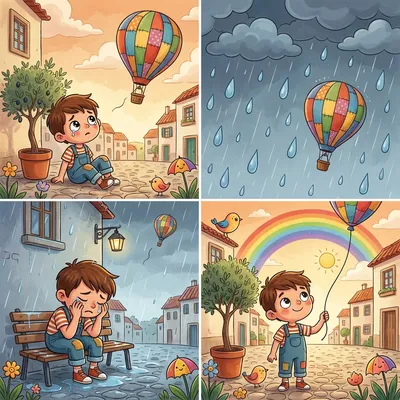
The song tells the poignant story of a boy named João whose balloon rises into the sky. Initially, the balloon floats happily through the air, with João singing along in joy. However, the narrative takes a sad turn when the rain comes and the balloon descends, only to fly away again — this time disappearing forever into the sky. This leaves João crying over his loss.
The simple narrative captures a universal childhood experience: the loss of something precious. The balloon serves as a metaphor for fleeting happiness and the temporary nature of beloved possessions. This emotional complexity, wrapped in simple language and a gentle melody, makes the song both accessible to children and meaningful across ages.
Popular Tradition
As a product of popular tradition, "O Balão do João" has been sung by Portuguese-speaking children for generations. The exact origins of the song are unknown, but its widespread recognition throughout Portugal and Portuguese-speaking communities worldwide speaks to its enduring appeal. The song's themes of childhood joy, loss, and sadness resonate across cultures and time periods.
Musical Characteristics
The melody is simple and repetitive, making it easy for young children to learn and sing. The short verses and clear rhyme scheme (céu/desceu, fugiu/viu) create a memorable structure that aids in oral transmission from one generation to the next.
Modern Interpretations
While remaining a children's song at its core, "O Balão do João" has been reinterpreted by various artists over the years. Some musicians have used the simple childhood scene as a vehicle for exploring deeper themes such as the fleeting nature of happiness, life's small disappointments, early experiences with loss, and nostalgic memories of childhood innocence.
The band Physalis, for instance, created a version that transformed the song into a meditation on these more complex themes, demonstrating how traditional children's songs can carry layered meanings that speak to both children and adults in different ways. This duality is characteristic of many enduring folk songs, which maintain their appeal across age groups and generations.
Themes
The song tells a simple but emotionally resonant story about loss — a universal childhood experience. The balloon represents something precious that is lost, teaching children about the temporary nature of things and how to handle disappointment.
Poetic Structure
The song uses short, simple lines with clear rhyming patterns (céu/desceu, fugiu/viu), making it memorable and easy to sing.
Poetic Structure
The song uses short, simple lines with clear rhyming patterns (céu/desceu, fugiu/viu), making it memorable and easy to sing.