

Rock-a-bye Baby
 1765
1765  England
 Lyrics
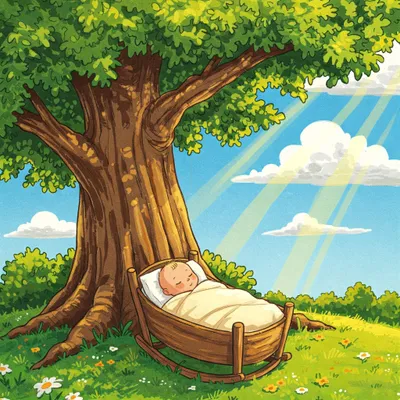
When the wind blows the cradle will rock,
When the bough breaks the cradle will fall,
And down will come baby, cradle and all.
History and Meaning
"Rock-a-Bye Baby" is one of the most famous nursery rhymes, with its earliest known printed version appearing around 1765 in "Mother Goose's Melody" in London, which was later reprinted in Boston in 1785, with the 1791 edition featuring lyrics beginning with "Hush-a-by baby on the tree top." The modern title "Rock-a-bye Baby" emerged in Benjamin Tabart's "Songs for the Nursery" in 1805, and the melody commonly associated with the rhyme today is attributed to American musician Effie I. Canning, first published in 1886. Several theories attempt to explain the iconic "treetop" imagery: the most widely cited suggests English colonists, possibly Mayflower pilgrims, observed Native American women rocking infants in birch-bark cradles suspended from tree branches, allowing the wind to gently sway them. Other interpretations propose the lullaby is a political allegory possibly referring to 17th-century English politics and the Glorious Revolution of 1688, where the "baby" symbolizes a monarch or heir to a shaky throne and the breaking "bough" represents unstable power or collapse of rule. Additionally some view it as a cautionary tale for parents about leaving infants unattended or in precarious situations, or more broadly as a metaphor for the human life cycle, with the baby "at the top of the world" representing youth and the "fall" symbolizing the inevitable challenges and end of life. A local Derbyshire legend connects the rhyme to Betty Kenny, who supposedly lived in a large yew tree and used a hollowed-out bough as a cradle for her child.