
Los Pollitos Dicen


Spanish Nursery Rhyme
Original Lyrics
Los pollitos dicenPío, pío, píoCuando tienen hambreCuando tienen frío
La gallina buscaEl maíz y el trigoLes da la comidaY les presta abrigo
Bajo sus dos alasAcurrucaditosHasta el otro díaDuermen los pollitos
English Translation
The little chicks sayCheep, cheep, cheepWhen they are hungryWhen they are cold
The hen looks forThe corn and the wheatShe gives them foodAnd lends them shelter
Under her two wingsAll cuddled upUntil the next dayThe little chicks sleep
Translation Notes
Vocabulary
Los pollitos - the little chicks
- Pollo = chicken (general)
- Pollito = little chick (diminutive with -ito suffix)
- Los = the (masculine plural definite article)
dicen - they say (third person plural present of decir, "to say")
Pío, pío, pío - cheep, cheep, cheep (onomatopoeia for chick sounds)
cuando - when
tienen - they have, they are (third person plural of tener, "to have")
- Used for both physical possession and states of being (hunger, cold)
hambre - hunger (feminine noun, despite ending in -e)
frío - cold (noun form; as adjective means "cold")
la gallina - the hen (female chicken)
- Gallo = rooster (male)
- Gallina = hen (female)
busca - searches for, looks for (third person singular of buscar)
el maíz - the corn
el trigo - the wheat
les - them (indirect object pronoun, third person plural)
da - gives (third person singular of dar, "to give")
la comida - the food, the meal
presta - lends, provides (third person singular of prestar)
el abrigo - the coat, the shelter, the warmth
bajo - under, beneath (preposition)
sus - her, their (possessive adjective)
dos - two
alas - wings (plural of ala, "wing")
acurrucaditos - all cuddled up, snuggled (diminutive of acurrucados, past participle of acurrucar, "to cuddle")
hasta - until
otro día - another day, the next day
duermen - they sleep (third person plural of dormir, "to sleep")
Grammar Notes
Present Tense Verbs: The entire song uses simple present tense, making it perfect for beginning Spanish learners:
- Dicen - they say
- Tienen - they have
- Busca - she searches
- Da - she gives
- Presta - she lends/provides
- Duermen - they sleep
Diminutive -ito/-itos: Spanish uses the diminutive suffix -ito (masculine) or -ita (feminine) to indicate:
- Small size: pollito (little chick from pollo)
- Affection: adding -ito makes something sound cuter or more endearing
- Both: acurrucaditos means both "little" and "cute/dear" as they cuddle
Indirect Object Pronouns: Les is an indirect object pronoun meaning "to them" or "for them":
- "Les da la comida" = "She gives [to] them the food"
- "Les presta abrigo" = "She lends [to] them shelter"
In Spanish, indirect object pronouns often appear even when the meaning might be clear without them, especially for emphasis or clarity.
Gender of Nouns: Hambre (hunger) is feminine, but in the singular it takes the masculine-looking article el (el hambre) because it begins with a stressed "a" sound, which would clash with la. Its adjectives stay feminine (el hambre extrema), and the plural returns to las hambres. Frío can be both an adjective (cold) and a masculine noun (the cold).
Preposition "Bajo": Bajo means "under" or "beneath." "Bajo sus dos alas" = "Under her two wings." Note that Spanish explicitly states "sus dos alas" (her two wings) where English might just say "her wings", because Spanish often explicitly numbers things for clarity.
"Cuando" Clauses: Cuando (when) introduces time clauses: "cuando tienen hambre, cuando tienen frío" (when they're hungry, when they're cold). The repetition of "cuando tienen" creates a rhythmic pattern typical of children's songs.
"Hasta": This preposition means "until" when referring to time: "hasta el otro día" (until the next day).
History and Meaning
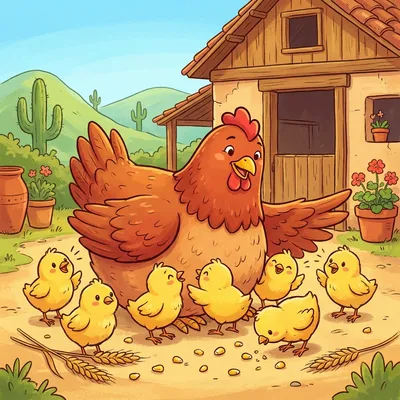
"Los Pollitos Dicen" (The Little Chicks Say) is the lullaby of the Spanish-speaking world. The chicks peep "pío, pío, pío" when they are hungry or cold, and their mother hen hunts up corn and wheat, feeds them, and tucks them under her wings until morning. The Chilean writer Ismael Parraguez first published it in 1907, and it has been sung at bedtimes across Latin America and Spain ever since, so much so that many mothers still call their babies "pollitos."
Where did the song Los Pollitos Dicen come from?
"Los Pollitos Dicen" was written by Ismael Parraguez, a Chilean musician and writer, and first appeared in 1907 in his collection "Poesías Infantiles" (Nursery Poems or Children's Poetry). Parraguez created a body of work specifically designed for young children, understanding the power of simple, melodic verse to teach language, convey values, and provide comfort.
The song quickly spread beyond Chile throughout Latin America and Spain, becoming a staple of childhood across the Spanish-speaking world. Its universal themes of maternal love, warmth, and protection, which is embodied in the culturally familiar image of a mother hen caring for her chicks, made it instantly relatable across different countries and regions.
The song has been translated into numerous languages, including English, French, and Portuguese, though it retains the strongest cultural resonance in Spanish-speaking communities. Its influence extends beyond music into language itself, as many Latina mothers use "pollitos" (little chicks) as an affectionate term for their babies, a direct homage to the song.
What is the meaning of the song Los Pollitos Dicen?
The narrative of the song is deceptively simple but emotionally rich:
"Los pollitos dicen: 'Pío, pío, pío' / Cuando tienen hambre, cuando tienen frío" (The little chicks say: "Cheep, cheep, cheep" / When they are hungry, when they are cold)
The opening establishes the chicks' vulnerability and their need for care. The onomatopoeia "pío, pío, pío" mimics the actual sound of chicks peeping, which is a plaintive, insistent cry that signals distress. The repetition of "cuando tienen" (when they have/are) emphasizes the two basic needs: hunger and cold.
"La gallina busca el maíz y el trigo / Les da la comida y les presta abrigo" (The hen looks for corn and wheat / She gives them food and lends them shelter)
The mother hen's response is immediate and comprehensive. She actively searches (busca) for nutritious food; she actively searches for both corn (maíz) and wheat (trigo), representing abundance and variety. Then she provides both sustenance (les da la comida) and warmth (les presta abrigo, literally "lends them shelter/coat").
"Bajo sus dos alas, acurrucaditos / Hasta el otro día duermen los pollitos" (Under her two wings, all cuddled up / Until the next day the little chicks sleep)
The final image is one of perfect security and peace. The chicks nestle (acurrucaditos, where the diminutive makes this word extra affectionate) under the protective wings of their mother, safe from harm and warm against the night. They sleep peacefully (duermen) until morning, completely trusting in their mother's care.
This simple cycle, consisting of need, response, and comfort, models the idealized relationship between mother and child, where maternal love is shown through practical care (feeding) and emotional nurturing (warmth, protection, security).
Cultural Significance
"Los Pollitos Dicen" holds a special place in Spanish-speaking cultural life for several interconnected reasons:
Universal Maternal Symbol: The hen and her chicks is an immediately recognizable image of maternal devotion found across cultures. The visual of chicks huddled under protective wings is so powerful it appears in religious imagery (Jesus comparing himself to a hen gathering her chicks in the Bible), art, and literature worldwide.
Family Values: The song perfectly encapsulates Latin American and Spanish cultural emphasis on family bonds, maternal sacrifice, and the centrality of the mother figure. The hen doesn't just feed her chicks; she actively searches for the best food and provides complete care, modeling an ideal of devoted, selfless motherhood.
Language Learning Tool: The song's simple present-tense verbs, repetitive structure, clear vocabulary, and memorable onomatopoeia make it an invaluable tool for teaching Spanish to young children or adult beginners. Every Spanish language curriculum includes it.
Intergenerational Continuity: Because the song has remained largely unchanged since 1907, it creates a powerful sense of continuity. Grandmothers sang it to their children, who sang it to their children, creating living bridges across generations and maintaining cultural connection even in diaspora communities.
Comfort and Security: As a lullaby or bedtime song, "Los Pollitos Dicen" provides emotional comfort. Its message, indicating that someone will care for you when you're hungry or cold, offers reassurance to children, making it ideal for soothing bedtime anxiety or settling restless children.
Educational Value
The song teaches multiple concepts simultaneously:
Animal Sounds and Onomatopoeia: "Pío, pío, pío" introduces children to how Spanish represents chick sounds, an entry point into understanding onomatopoeia and how different languages represent the same sounds differently.
Basic Needs: The song establishes that all living creatures need food (comida) and warmth (abrigo), teaching empathy and biological awareness.
Mother-Child Relationships: Children learn about parental care and responsibility through the hen's actions.
Cause and Effect: The chicks cry because they're hungry or cold; the mother responds by providing food and shelter, which creates a clear cause-and-effect sequence.
Spanish Verbs: The song contains excellent examples of common present-tense verbs: dicen (they say), tienen (they have), busca (she searches), da (she gives), presta (she lends), duermen (they sleep).
Performance Tradition
"Los Pollitos Dicen" is often performed with accompanying hand gestures and movements:
- Fingers as beaks: Children bring their fingers together repeatedly to mimic peeping beaks during "pío, pío, pío"
- Spread arms as wings: Adults or children spread their arms wide like protective wings during the verse about sheltering under wings
- Cuddling motion: Children hug themselves during "acurrucaditos" (cuddled up)
- Sleeping gesture: Hands pressed together beside tilted head to show sleeping chicks
These physical elements transform the song into a multi-sensory learning experience, engaging kinesthetic as well as auditory learning styles.
Variations
While the core song remains consistent, various regional and performance variations exist:
- Some versions extend the song with additional verses about the chicks growing up
- Different arrangements exist for different musical contexts (lullaby, playful, educational)
- The melody may vary slightly by region, though the words remain largely stable
- Some modern versions add animal sounds beyond "pío, pío, pío" or include other farm animals
These variations demonstrate the song's adaptability while maintaining its essential character.
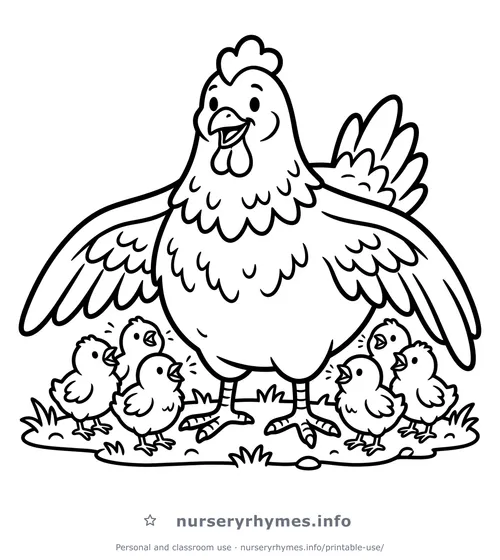
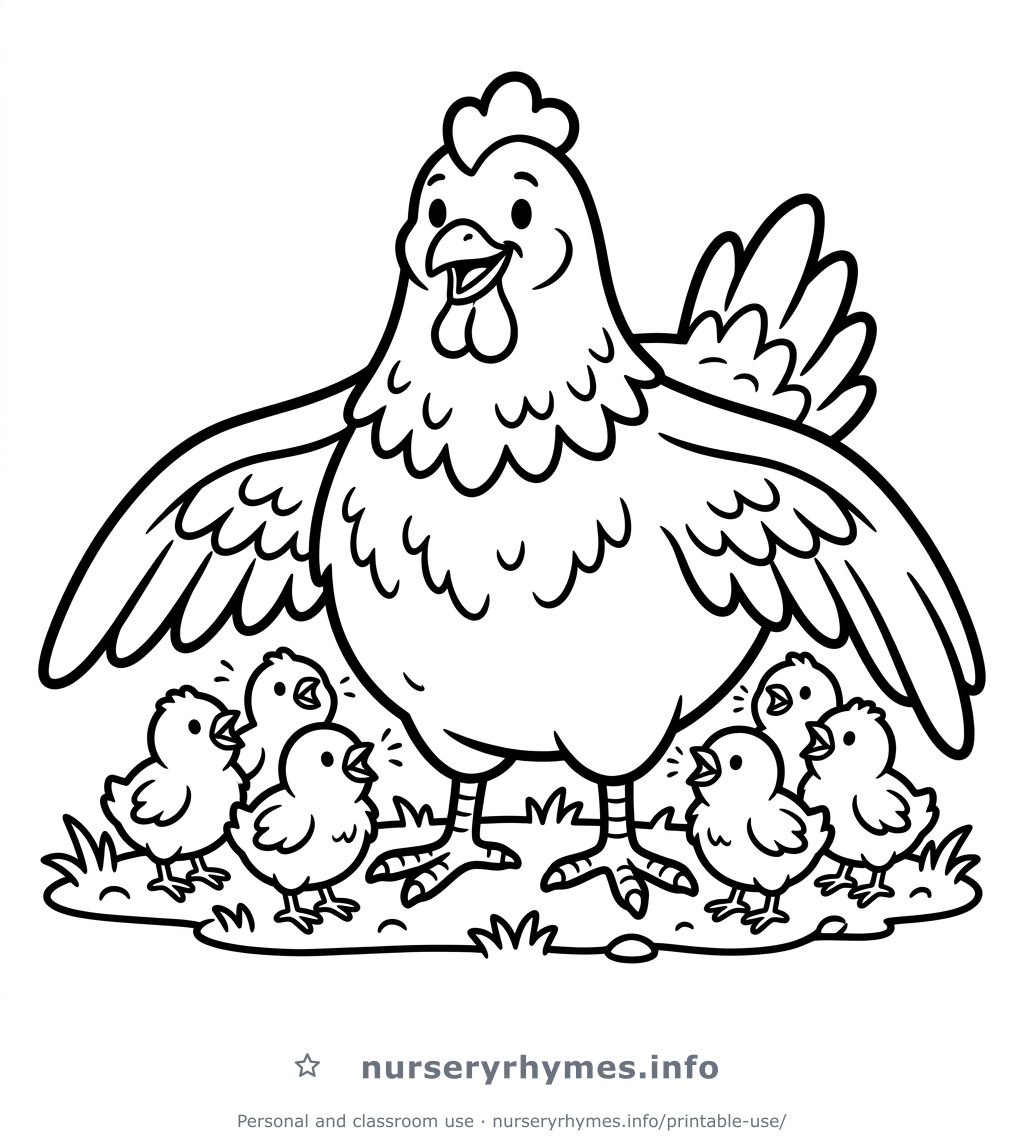
Free Printable Coloring Page
Print this Los Pollitos Dicen coloring sheet for free and let little ones bring it to life with crayons or pencils.
Full-resolution PNG · Fits the paper size selected in your print dialog · Personal and classroom use
Lyrics from nurseryrhymes.info