
Pin Pon

Spanish Nursery Rhyme
Original Lyrics
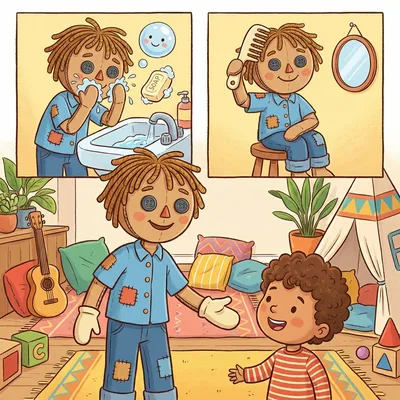
Pin Pon es un muñecoMuy guapo y de cartónSe lava la caritaCon agua y con jabón
Se desenreda el peloCon peine de marfilY aunque se da tironesNo grita y dice ¡uy!
Pin Pon dame la manoCon un fuerte apretónQue quiero ser tu amigoPin Pon, Pin Pon, Pin Pon
English Translation
Pin Pon is a dollVery handsome and made of cardboardHe washes his little faceWith water and with soap
He untangles his hairWith an ivory combAnd even though he pullsHe doesn't scream and says "ow!"
Pin Pon give me your handWith a strong handshakeBecause I want to be your friendPin Pon, Pin Pon, Pin Pon
Translation Notes
Vocabulary
Pin Pon - the character's name (possibly onomatopoeia mimicking the sound of knocking or a bell)
muñeco - doll (masculine; muñeca = feminine doll)
muy - very
guapo - handsome, good-looking, nice
de cartón - made of cardboard
- De = of, made of
- Cartón = cardboard
se lava - he washes (himself)
- Reflexive verb from lavarse (to wash oneself)
la carita - the little face
- Cara = face
- -ita = diminutive suffix (makes it affectionate/small)
con - with
agua - water (feminine noun despite starting with a)
jabón - soap
se desenreda - he untangles
- Reflexive verb from desenredarse
- En redar = to tangle
- Desenredar = to untangle
el pelo - the hair
peine - comb
de marfil - of ivory, made of ivory
aunque - even though, although
se da tirones - he gets tugs, it pulls
- Tirones from tirón (pull, tug)
no grita - he doesn't shout (from gritar, "to shout")
dice - says (third person singular of decir, "to say")
¡uy! - ow! / oops! (an exclamation)
dame la mano - give me your hand
- Dame = give me (imperative of dar)
- La mano = the hand
con apretón - with a handshake
- Apretón = squeeze, handshake (from apretar, "to squeeze/press")
Grammar Notes
Reflexive Verbs: The song extensively uses reflexive verbs, where the subject performs an action on themselves:
- Se lava = he washes himself (not someone else)
- Se desenreda = he untangles himself (his own hair)
Reflexive verbs use reflexive pronouns (me, te, se, nos, os, se) that refer back to the subject. They're essential in Spanish for describing self-care activities.
Diminutive Suffix -ito/-ita: Spanish adds -ito (masculine) or -ita (feminine) to nouns to indicate:
- Small size: carita (little face from cara)
- Affection: making something sound cute or endearing
- Both: implying something is both small and dear
The song uses the diminutive carita (little face) to create an affectionate, child-friendly tone.
"Muy" + Adjective: Muy (very) intensifies adjectives: "muy guapo" (very handsome). Note that muy is used before adjectives, while mucho is used with verbs.
Preposition "de": Has multiple meanings:
- Material: "de cartón" (made of cardboard)
- Possession: "peine de marfil" (ivory comb)
- Origin: indicates what something is made from
"Con" (With): Indicates accompaniment or instrument:
- "con agua y con jabón" (with water and with soap)
- "con peine" (with a comb)
"Aunque" Clauses: Aunque introduces concessive clauses (even though, although): "aunque se da tirones" (even though it tugs). These clauses acknowledge a difficulty while emphasizing persistence despite it.
Negation with "no": Spanish makes a verb negative by placing no directly before it: no grita (he doesn't shout). The same little word handles every "not," no matter the verb.
Imperative "Dame": Dame (give me) is the informal imperative of dar (to give) combined with the indirect object pronoun me. Imperatives are command forms used for instructions or requests.
History and Meaning
Pin Pon is a cardboard doll who washes his face with soap and water, combs his hair without making a fuss when it tugs, and shakes your hand like a good friend. He is, in short, a hygiene lesson with a name, and a hugely successful one. The character comes from a Chilean children's TV show that first aired in 1968, built around the actor Jorge Guerra with pianist Valentín Trujillo at the keyboard. The song spread so far that "pin pon" became a generic word for a doll across the Spanish-speaking world.
Origins
While folk songs about hygiene and good behavior existed before, the modern "Pin Pon" character and song were popularized by Jorge Guerra, a Chilean actor, director, and academic, who created and performed the role for a children's television program that debuted in 1968. Guerra's vision was to create educational content that would make learning good habits fun and memorable for young children.
The television show featured Guerra dressed as or performing alongside Pin Pon, a simple but appealing doll character typically depicted as being made from cardboard or rags, materials accessible to children, emphasizing that Pin Pon was an "everyday" friend rather than an expensive toy. Pianist Valentín Trujillo accompanied Guerra, providing the musical foundation for the songs and creating a warm, inviting atmosphere.
The program broadcast positive lessons about:
- Personal hygiene (washing face, combing hair)
- Good table manners
- Bedtime routines
- Friendship and social skills
- Following daily routines cheerfully
Guerra's adaptation and portrayal of Pin Pon quickly transcended its Chilean origins, spreading throughout Latin America. The song became so ubiquitous that it's now considered a cultural touchstone, part of the "universal heritage" of Spanish-speaking childhood, connecting multiple generations through shared memories.
The character's cultural impact was so profound that Pin Pon was referenced in the Spanish-language version of the DreamWorks animated film Shrek, demonstrating the character's recognition even in contemporary popular culture. Additionally, making "Pin Pon dolls" from cardboard has become a popular craft activity in Spanish-speaking preschools, bringing the song full circle by allowing children to create their own versions of the character.
Meaning & Interpretation
The song narrates Pin Pon's daily routine, presenting it as a model for children to follow:
"Pin Pon es un muñeco muy guapo y de cartón" (Pin Pon is a very handsome doll made of cardboard)
The opening establishes Pin Pon's identity. He's guapo (handsome/nice-looking) but made of simple cartón (cardboard), accessible and relatable rather than precious or fragile. This detail is significant: Pin Pon isn't a fancy porcelain doll but an everyday companion made from ordinary materials.
"Se lava la carita con agua y con jabón" (He washes his little face with water and with soap)
The first hygiene lesson: Pin Pon washes his face (carita, using the affectionate diminutive) with both water AND soap, emphasizing thoroughness. The use of the reflexive verb se lava (washes himself) reinforces self-care and independence.
"Se desenreda el pelo con peine de marfil" (He untangles his hair with an ivory comb)
Pin Pon combs his hair, using the verb desenredar (to untangle), which vividly describes the action. The mention of an "ivory comb" (peine de marfil) adds a touch of fantasy and elegance to an ordinary activity, making it feel special.
"Y aunque se da tirones, no grita y dice ¡uy!" (And even though it tugs, he doesn't shout, he just says "ow!")
This verse teaches patience and good humour. Even when the comb pulls (se da tirones), Pin Pon doesn't shout or make a fuss; he just says "uy!" (ow!). It models accepting small discomforts cheerfully as part of looking after yourself.
Additional verses cover:
- Washing hands before eating
- Having good table manners
- Being friendly and shaking hands
- Saying goodnight and going to bed
Each verse uses Pin Pon's compliance with routines to model ideal behavior, making hygiene and manners seem fun and normal rather than burdensome chores.
Cultural Significance
"Pin Pon" occupies a unique space in Latin American culture:
Generational Continuity: Parents who grew up singing "Pin Pon" now sing it to their own children, creating intergenerational bonds through shared cultural experience. Grandparents, parents, and children all know the same character and lyrics.
Hygiene Education Tool: The song remains a staple in preschools, kindergartens, and homes throughout the Spanish-speaking world. Teachers use it to introduce hygiene routines, and parents sing it during bath time or before bed to make these activities more enjoyable.
Generic Name for Dolls: So pervasive is the Pin Pon character that in many Spanish-speaking regions, "pin pon" has become a generic term for dolls or puppets, similar to how "kleenex" became synonymous with tissues or "band-aid" with adhesive bandages.
Cultural Touchstone: The song provides a common reference point across diverse Spanish-speaking countries and regions. A child in Mexico, Spain, Argentina, or Colombia all know Pin Pon, creating cultural continuity across vast distances.
Accessibility and Simplicity: The "cardboard doll" concept democratizes the character, every child can relate to Pin Pon because he's not made of expensive materials. The message is that anyone, regardless of economic circumstances, can practice good hygiene and manners.
Educational Value
The song teaches multiple lessons simultaneously:
Hygiene Practices:
- Washing face with soap and water
- Combing/brushing hair
- Washing hands before meals
Emotional Regulation: Pin Pon doesn't cry when his hair gets pulled, modeling patience and resilience.
Daily Routines: The song presents a structured sequence of morning and evening activities, helping children understand routine and order.
Independence: The reflexive verbs (se lava, se desenreda) emphasize self-care, Pin Pon does these things for himself, encouraging children to take ownership of their own hygiene.
Social Skills: Verses about greeting friends and minding table manners teach social competence.
Spanish Language: Simple present-tense verbs, reflexive verb constructions, and diminutives make it an excellent language-learning tool.
Performance Tradition
"Pin Pon" is rarely just sung, it's usually performed with accompanying actions:
Face washing: Children mime washing their faces with circular motions Hair combing: Pretend to comb hair with fingers Handshaking: Children shake hands with each other during "dame la mano" (give me your hand) Sleeping: Hands pressed together beside tilted head for bedtime verses
These kinesthetic elements transform the song into a multi-sensory learning experience, engaging muscle memory alongside auditory learning. Acting out the routines helps children internalize the behaviors more effectively than simply hearing about them.
Lyrics from nurseryrhymes.info