

Ako Ay May Lobo
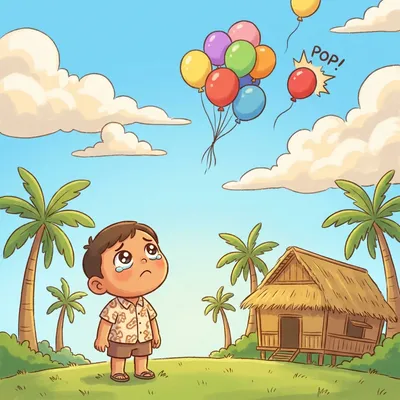

Tagalog Nursery Rhyme
Original Lyrics
Ako ay may loboLumipad sa langit'Di ko na nakitaPumutok na palaSayang ang pera koPinambili ng loboKung pagkain sanaNabusog pa ako
English Translation
I had a balloonIt flew to the skyI never saw it againTurns out it poppedMy money went to wasteBuying that balloonIf I had bought food insteadI would be full
Translation Notes
Grammar Notes
"Ay" is a grammatical particle in Tagalog that inverts the normal word order for emphasis. "Ako ay may lobo" emphasizes "I" had a balloon (as opposed to someone else).
"Sana" expresses wishful thinking or regret about something that didn't happen.
Line-by-Line Translation
Ako ay may lobo : "I had a balloon"
- Ako = I
- ay = (linking verb, no direct English equivalent)
- may = have/possess
- lobo = balloon
Lumipad sa langit : "It flew to the sky"
- Lumipad = flew (past tense of "lipad")
- sa langit = to the sky
'Di ko na nakita : "I never saw it again"
- 'Di = not (contraction of "hindi")
- ko = I/my
- na = anymore/already
- nakita = saw (past tense of "kita")
Pumutok na pala : "Turns out it popped"
- Pumutok = popped/burst (past tense)
- na pala = turns out/apparently
Sayang ang pera ko : "My money went to waste"
- Sayang = what a waste/pity
- ang pera ko = my money
Pinambili ng lobo : "Buying that balloon"
- Pinambili = used to buy
- ng lobo = of balloon
Kung pagkain sana : "If I had bought food instead"
- Kung = if
- pagkain = food
- sana = hopefully/wish (expressing regret)
Nabusog pa ako : "I would be full"
- Nabusog = became full/satisfied
- pa = still/even
- ako = I
History and Meaning
A child spends their money on a balloon, it floats away and pops, and they are left wishing they had bought food instead, at least then they would be full. "Ako Ay May Lobo" is a Tagalog children's song with an unusually frank little lesson about money tucked inside it ("lobo" means balloon).
What is the story of Ako Ay May Lobo?
The lyrics tell the story of a child who bought a balloon with their money. The balloon flew up into the sky and the child never saw it again, as it had popped. The child then expresses regret, realizing that the money spent on the balloon was wasted. If they had bought food instead, they would have been satisfied and full.
This simple narrative captures a universal childhood experience: the disappointment of losing something precious, combined with a reflection on the value of money and the wisdom of spending choices.
What is the educational value of Ako Ay May Lobo?
Beyond being a catchy children's song, Ako Ay May Lobo serves as an educational tool that teaches important life lessons in a gentle, relatable way. The song subtly introduces concepts of financial literacy to young children, helping them understand:
- The value of money: Money is limited and should be spent wisely
- Needs vs. wants: The difference between necessities (food) and temporary pleasures (balloon)
- Delayed gratification: Sometimes it's better to spend on lasting value rather than momentary enjoyment
- Learning from mistakes: The child's regret becomes a learning experience
What is the cultural context of Ako Ay May Lobo?
In Filipino culture, where family resources are often carefully managed and children are taught to be mindful of expenses from a young age, this song reinforces values of practical thinking and wise decision-making. The comparison between a balloon (which brings brief joy but quickly disappears) and food (which provides nourishment and satisfaction) resonates with traditional Filipino values of practicality and prioritizing basic needs.
How has Ako Ay May Lobo been passed down?
Like many Filipino folk songs, Ako Ay May Lobo has been passed down through oral tradition, sung by parents and grandparents to children across generations. Its simple melody and relatable story have ensured its survival and continued popularity in Filipino households, schools, and communities both in the Philippines and among Filipino diaspora communities worldwide.
The song exemplifies how traditional children's songs can serve multiple purposes: entertaining children while simultaneously teaching them important values and life lessons in a format they can easily understand and remember.
Lyrics from nurseryrhymes.info