

Bahay Kubo
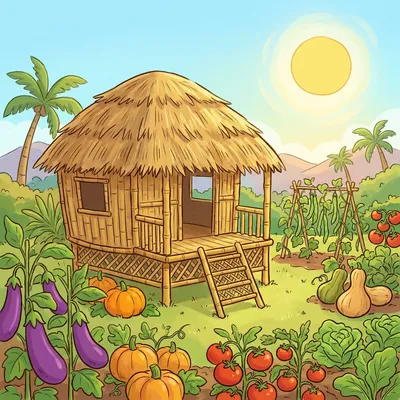

Tagalog Nursery Rhyme
Original Lyrics
Bahay kubo, kahit munti,Ang halaman doon ay sari-sari.Singkamas at talong, sigarilyas at maniSitaw, bataw, patani.Kundol, patola, upo't kalabasa,At saka mayroon pang labanos, mustasa,Sibuyas, kamatis, bawang at luyaSa paligid-ligid ay puno ng linga.
English Translation
Nipa hut, even though it's small,The plants that grow around it are varied.Jicama and eggplant, winged bean and peanut,String bean, hyacinth bean, lima bean.Wax gourd, sponge gourd, bottle gourd and squash,And there's also radish, mustard,Onion, tomato, garlic and ginger,And all around are sesame seeds.
Translation Notes
Grammar Notes
Sari-sari is an example of reduplication in Tagalog, a common grammatical feature where repeating a word or part of a word intensifies or modifies its meaning. Here it means "various" or "of many kinds."
Line-by-Line Translation
Bahay kubo, kahit munti - "Nipa hut, even though it's small"
- Bahay kubo = nipa hut (a traditional Filipino house made from nipa palm)
- kahit = even though
- munti = small/tiny
- The term "bahay kubo" literally means "cubed house," referring to its square, single-room design
Ang halaman doon ay sari-sari - "The plants that grow around it are varied"
- Ang halaman = the plants
- doon = there
- ay = are (linking verb)
- sari-sari = varied/diverse (reduplicated word meaning "of different kinds")
History and Meaning
Bahay Kubo is a Tagalog folk song that nearly every Filipino child learns, and it doubles as a vegetable garden you can sing. After two opening lines about a small nipa hut, the song reels off eighteen vegetables growing around it, from jicama and eggplant to garlic, ginger, and sesame. It is part nursery rhyme, part planting list, and a snapshot of self-sufficient rural life in the lowlands of Luzon.
What is the cultural significance of Bahay Kubo?
This song is often used in classrooms to introduce Filipino children to different vegetables and aspects of Filipino agricultural heritage. The nipa hut represents traditional Filipino architecture and the self-sufficient lifestyle of rural communities.
When was Bahay Kubo first documented?
Bahay Kubo was first documented in 1924 by academics and musicians Emilia S. Cavan and Francisco Santiago, who aimed to preserve Filipino cultural heritage through collecting and recording traditional songs. While its exact origins are unknown, the song is believed to have originated during the Spanish colonial era or evolved during colonial times, partly due to the inclusion of certain non-indigenous vegetables in its lyrics.
The song gained widespread popularity when Tagalog became the basis for the national language in 1937, making it a staple in Filipino language classes throughout the Philippines. Although sometimes erroneously attributed to composer Felipe Padilla de León, the song's true composer remains unknown, as is common with many folk songs passed down through oral tradition.
What is a nipa hut?
The bahay kubo itself is a traditional Filipino dwelling made of indigenous materials, particularly nipa palm for the roof and bamboo for the walls and floor. The term "cubed house," which is what bahay kubo literally translates to, was reportedly popularized by American teachers during the early 20th century who were intrigued by these small, square, single-room houses that dotted the Philippine countryside.
These humble structures represent the ingenuity of Filipino architecture, using locally available materials to create homes that are well-suited to the tropical climate while embodying the values of simplicity and harmony with nature.
What is the symbolism of the Bahay Kubo song?
Beyond its literal description of a nipa hut and its vegetable garden, Bahay Kubo carries significant cultural meaning for Filipinos. It symbolizes the self-sufficiency of rural Filipino life and the deep connection between people and the land. The abundance of vegetables growing around the hut represents agricultural richness and the Filipino tradition of planting kitchen gardens to provide fresh, organic produce for the family.
The song also promotes a healthy lifestyle by highlighting a variety of nutritious vegetables, serving as an early form of nutrition education for Filipino children. It is deeply ingrained in Filipino culture and is considered a cultural touchstone that connects Filipinos to their agricultural roots and traditional way of life, even as the country has become increasingly urbanized.
What is the educational value of Bahay Kubo?
Bahay Kubo is frequently sung to children not just for entertainment, but as an educational tool. The enumeration of 18 different vegetables helps children learn vocabulary, introduces them to the biodiversity of Philippine agriculture, and teaches them about traditional Filipino farming practices and the importance of growing one's own food.
The 18 Vegetables
The song enumerates 18 different vegetables and plants, showcasing the Philippines' agricultural richness:
- Singkamas = Jicama
- Talong = Eggplant
- Sigarilyas = Winged Beans
- Mani = Peanuts
- Sitaw = String Beans
- Bataw = Hyacinth Beans
- Patani = Lima Beans
- Kundol = Winter Melon/Wax Gourd
- Patola = Sponge Gourd/Luffa
- Upo = Bottle Gourd
- Kalabasa = Squash/Pumpkin
- Labanos = White Radish
- Mustasa = Mustard Leaves
- Sibuyas = Onion
- Kamatis = Tomatoes
- Bawang = Garlic
- Luya = Ginger
- Linga = Sesame Seeds
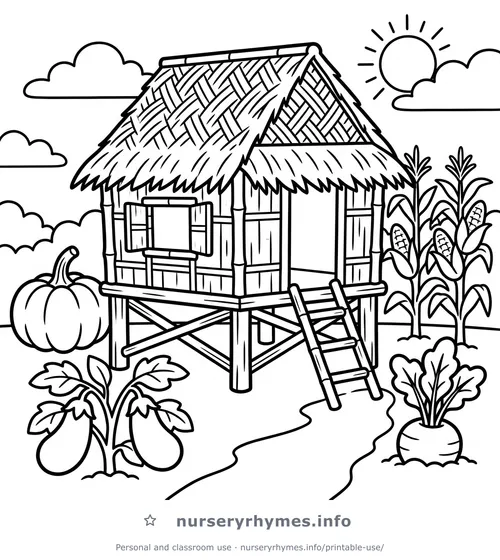
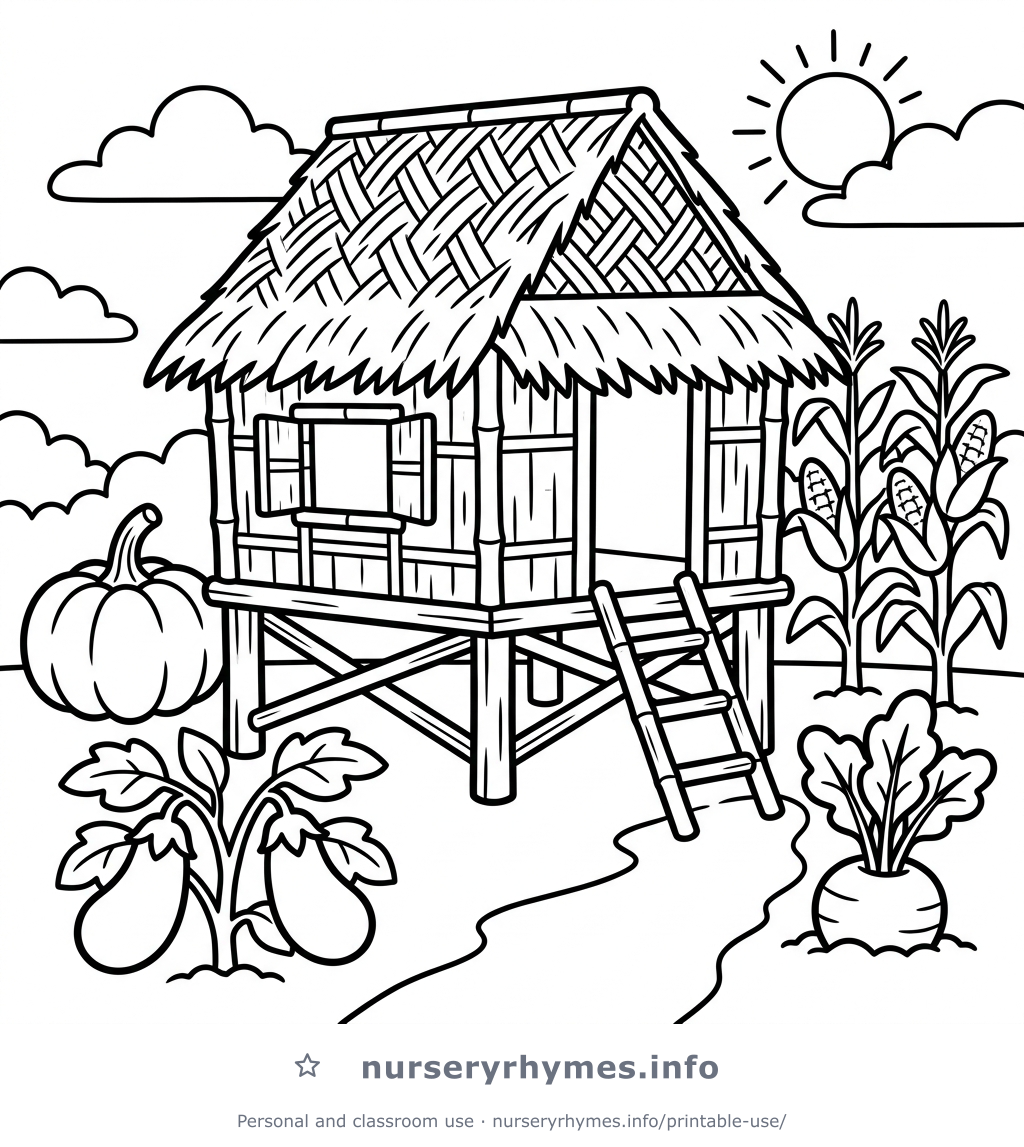
Free Printable Coloring Page
Print this Bahay Kubo coloring sheet for free and let little ones bring it to life with crayons or pencils.
Full-resolution PNG · Fits the paper size selected in your print dialog · Personal and classroom use
Lyrics from nurseryrhymes.info