

Ten Little Fingers

Lyrics
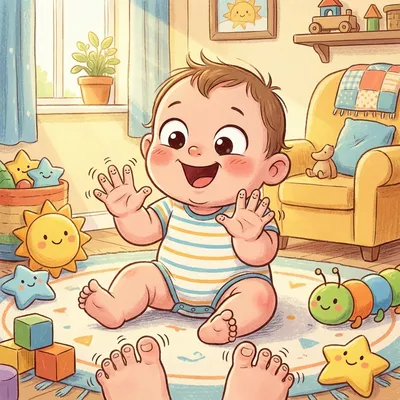
One little, two little, three little fingers,Four little, five little, six little fingers,Seven little, eight little, nine little fingers,Ten little fingers on my hands.
History and Meaning
"Ten Little Fingers" gives a toddler ten things to count that are always to hand: their own fingers, wiggled one at a time from one to ten. It borrows its tune from the nineteenth-century "Ten Little Indians," cleaned up into a gentle counting exercise.
Origins
The rhyme is based on the melody of "Ten Little Indians," a nineteenth-century American minstrel song written by Septimus Winner in 1868. Over time, educators and parents adapted the melody to create a gentle, child-friendly counting exercise focused simply on fingers and toes.
Because the finger-counting variant evolved through oral tradition, there is no single recorded author or publication date. The song is distinct from the 1921 Tin Pan Alley comic song of the same name, as well as Mem Fox's 2008 picture book Ten Little Fingers and Ten Little Toes.
Meaning & Interpretation
The primary function of Ten Little Fingers is educational, acting as an early numeracy and coordination tool. The repetitive structure and simple vocabulary make it easy for infants and toddlers to follow along.
During the song, children perform actions such as wiggling their fingers, clapping, or pointing. These movements, known as fingerplays, help develop fine motor skills and hand-eye coordination.
What is the melody used for Ten Little Fingers?
The song uses the melody of "Ten Little Indians," a traditional tune composed in 1868 by Septimus Winner. This tune is also shared by other popular nursery songs, including "Michael Finnegan."
How does the finger-counting song help babies?
The song acts as a fingerplay exercise that helps infants develop fine motor skills and spatial awareness. By connecting spoken numbers with the physical action of showing or wiggling their fingers, children learn basic counting and body part recognition.
Related Nursery Rhymes




Lyrics from nurseryrhymes.info