

There Was a Crooked Man
 1842
1842  Britain
 Lyrics
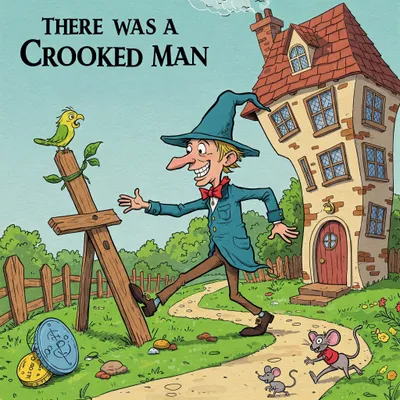
He found a crooked sixpence against a crooked stile;
He bought a crooked cat, which caught a crooked mouse,
And they all liv'd together in a little crooked house.
History and Meaning
The first recorded version of "There Was a Crooked Man" appeared in print in 1842, in James Orchard Halliwell's collection "The Nursery Rhymes of England," though it is widely believed the rhyme circulated orally long before its publication. Two main theories explain the rhyme's origin: one suggests it was inspired by the medieval town of Lavenham in Suffolk, England, renowned for its distinctive half-timbered houses that lean and tilt at unusual angles, while another connects the "crooked man" to Scottish General Sir Alexander Leslie (1582-1661), who played a crucial role in the Bishops' Wars during the reign of King Charles I. In the historical interpretation, the "crooked stile" symbolizes the border negotiations between England and Scotland, while the "crooked house" represents the uneasy alliance that eventually formed between the two nations. The term "crooked" carries a dual meaning in the rhyme, implying both physical imperfection and moral ambiguity, which has contributed to the rhyme's enduring appeal as both a playful children's verse and a possible political allegory.