

The Wheels on the Bus



Lyrics
You can replace 'All through the town' with 'All day long' - typically the former preferred in the US and the later in the UK
The wheels on the bus go round and roundRound and roundRound and roundThe wheels on the bus go round and roundAll through the town
The wipers on the bus go swish, swish, swishSwish, swish, swishSwish, swish, swishThe wipers on the bus go swish, swish, swishAll through the town
The doors on the bus go open and shutOpen and shutOpen and shutThe doors on the bus go open and shutAll through the town
The signals on the bus go blink, blink, blinkBlink, blink, blinkBlink, blink, blinkThe signals on the bus go blink, blink, blinkAll through the town
The horn on the bus goes beep, beep, beepBeep, beep, beepBeep, beep, beepThe horn on the bus goes beep, beep, beepAll through the town
The babies on the bus go "Wah, wah, wah!""Wah, wah, wah!""Wah, wah, wah!" The babies on the bus go "Wah, wah, wah!"All through the town
The mommies on the bus go "Shh, shh, shh!""Shh, shh, shh!""Shh, shh, shh!"The mommies on the bus go "Shh, shh, shh!"All through the town
The daddies on the bus go "I love you!""I love you!""I love you!"The daddies on the bus go "I love you!"All through the town
The motor on the bus goes vroom, vroom vroomVroom, vroom, vroomVroom, vroom, vroomThe motor on the bus goes vroom, vroom, vroomAll through the town
The people on the bus go up and downUp and downUp and downThe people on the bus go up and downAll through the town
History and Meaning
"The Wheels on the Bus" turns a bus ride into a string of actions: wheels round and round, wipers swish, doors open and shut, babies wah. It feels ancient, but it has a named author, a Boston writer called Verna Hills, who published it as a poem in 1937 and set it to the tune of "Here We Go Round the Mulberry Bush."
Origins
The song was written by Verna Hills, a writer from Boston, Massachusetts. She first published the lyrics in the December 1937 issue of the magazine American Childhood as a poem titled "The Bus." The original poem featured slightly different wording, beginning with "The wheels of the bus" rather than "on the bus."
The song uses the familiar pattern associated with the traditional nursery rhyme "Here We Go Round the Mulberry Bush." It spread through schools and nurseries over the following decades, with parents and teachers adding new verses and sound effects.
Meaning & Interpretation
The lyrics describe a bustling bus ride, detailing the actions of various components like the wheels going round, the wipers going swish, the doors opening and shutting, and the reactions of the passengers. The song has minor regional variations; for instance, the final line of each verse is commonly sung as "all through the town" in North America, while "all day long" is often preferred in the United Kingdom.
The song's primary appeal is its interactive nature. Children perform physical actions matching the lyrics, such as rolling their hands for the wheels, waving their arms for the wipers, or bouncing up and down for the passengers. This physical engagement makes the song an effective tool for group play and developmental coordination.
Who wrote The Wheels on the Bus?
The lyrics were originally written by Verna Hills, who lived from 1898 to 1990. She published the text as a children's poem titled "The Bus" in late 1937.
What tune is The Wheels on the Bus based on?
The song is sung to the melody of the traditional British nursery rhyme "Here We Go Round the Mulberry Bush."
Music Video
If the player is unavailable, watch this video on YouTube.
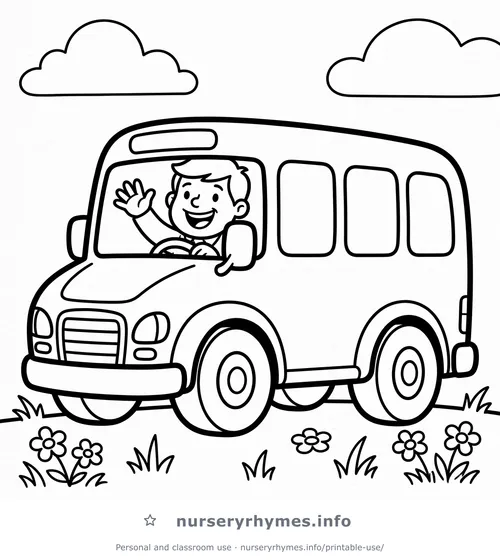
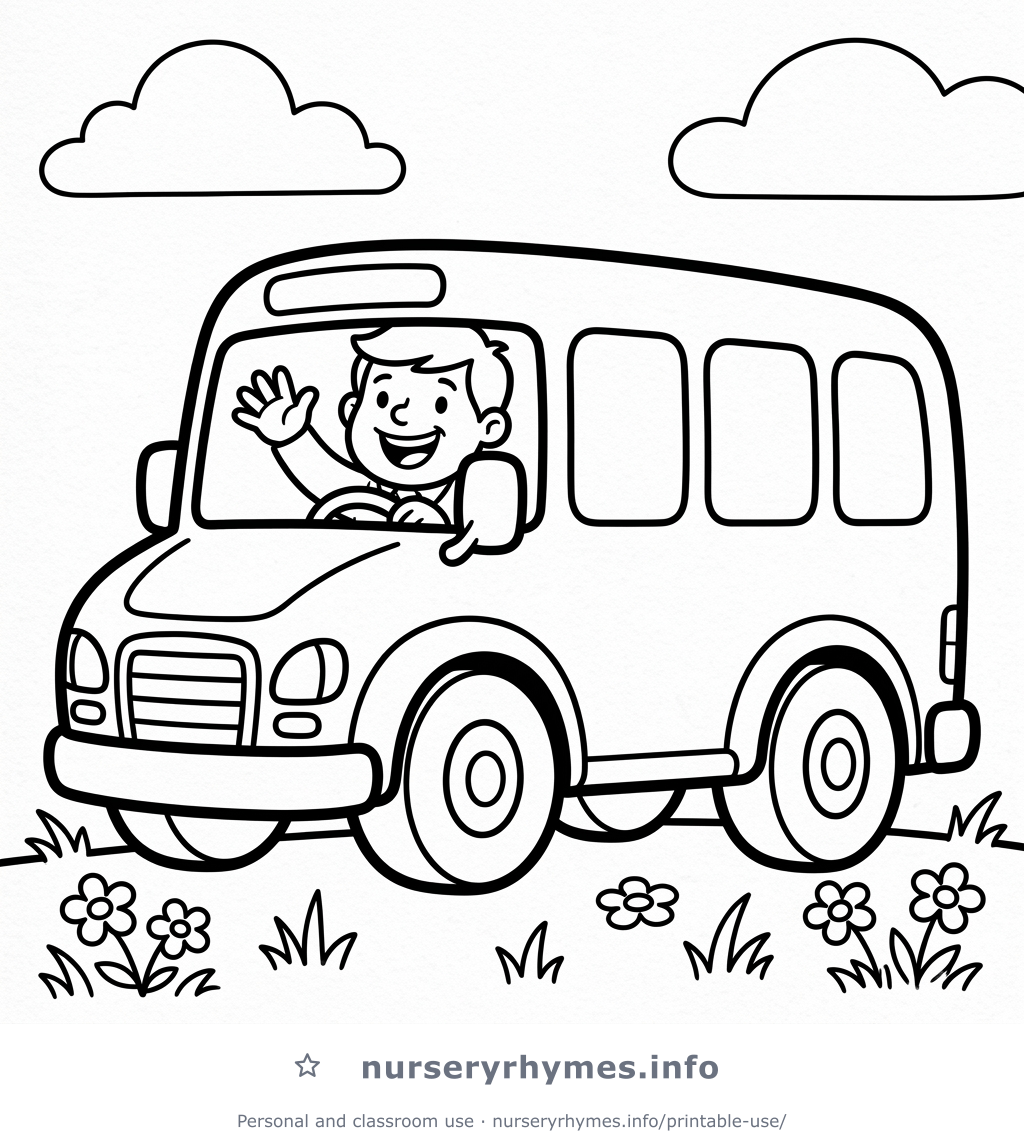
Free Printable Coloring Page
Print this The Wheels on the Bus coloring sheet for free and let little ones bring it to life with crayons or pencils.
Full-resolution PNG · Fits the paper size selected in your print dialog · Personal and classroom use
Related Nursery Rhymes





Lyrics from nurseryrhymes.info