
Oh, The Grand Old Duke of York


Lyrics
Oh, the grand old Duke of YorkHe had ten thousand menHe marched them up to the top of the hillAnd he marched them down again
And when they were up, they were upAnd when they were down, they were downAnd when they were only half-way upThey were neither up nor down
Oh, the grand old Duke of YorkHe had ten thousand menHe marched them up to the top of the hillAnd he marched them down again
And when they were up, they were upAnd when they were down, they were downAnd when they were only half-way upThey were neither up nor down
Oh, the grand old Duke of YorkHe had ten thousand menHe marched them up to the top of the hillAnd he marched them down again
And when they were up, they were upAnd when they were down, they were downAnd when they were only half-way upThey were neither up nor down
History and Meaning
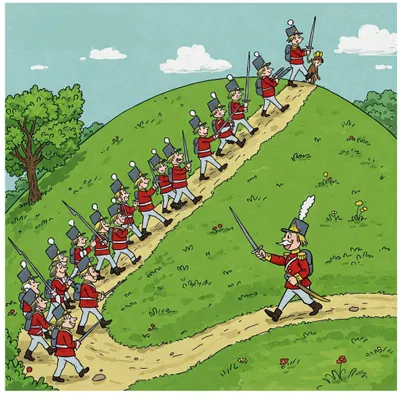
The Grand Old Duke marches ten thousand men to the top of the hill and straight back down again, achieving precisely nothing. The phrase has become English shorthand for pointless effort. Children act it out, rising on "up" and crouching on "down," until the half-way line catches everyone out.
Origins
The song has a complex history and evolved from earlier seventeenth-century marching verses. The earliest recorded ancestor is "Old Tarlton's Song," which was printed in 1642 and featured the King of France marching his men up a hill rather than an English Duke. Over the eighteenth and nineteenth centuries, the lyrics were adapted to satirize various political and military figures, including Napoleon Bonaparte. The modern version of the rhyme, which focuses specifically on the Duke of York, was popularized in print in 1913 in Arthur Rackham's Mother Goose.
Meaning & Interpretation
The identity of the "Grand Old Duke of York" has been the subject of two major historical theories. The most common theory links the song to Prince Frederick, Duke of York and Albany, who commanded the British army during the Flanders Campaign of the French Revolutionary Wars in the 1790s. His military maneuvers, particularly at the Battle of Tourcoing in 1794, were criticized as indecisive, making him a prime target for satirical street ballads. Another popular theory connects the rhyme to Richard, Duke of York, and his actions during the Wars of the Roses. In 1460, Richard marched his army down from Sandal Castle to engage a larger Lancastrian force at the Battle of Wakefield, resulting in his defeat and death. However, folklorists generally view the song as a generic parody of military leadership.
Who is the Grand Old Duke of York?
A popular theory suggests the song satirizes Prince Frederick, the Duke of York, for his unsuccessful campaigns during the French Revolutionary Wars in the 1790s. Another theory links it to Richard, Duke of York, who was defeated at the Battle of Wakefield in 1460.
When was The Grand Old Duke of York first published?
The earliest precursor to the song was recorded in print in 1642 as "Old Tarlton's Song." The modern version focusing on the Duke of York was standardized and published in 1913 in Arthur Rackham's Mother Goose.
Music Video
If the player is unavailable, watch this video on YouTube.
Free Printable Coloring Page
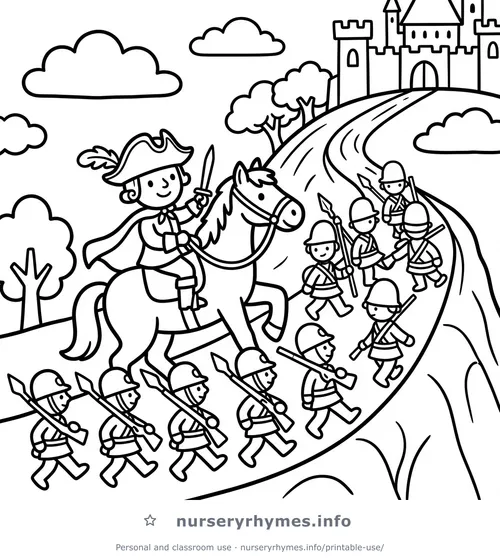
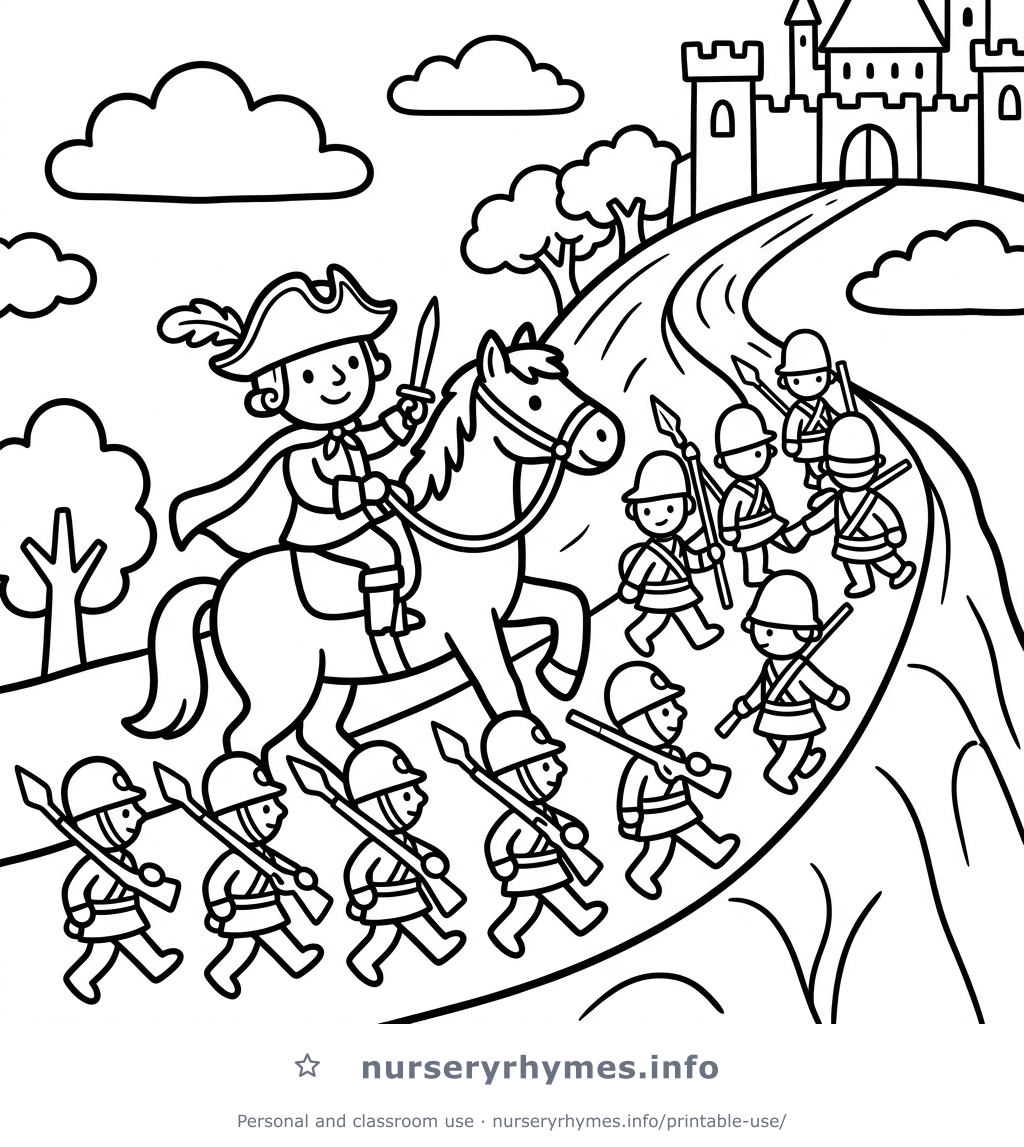
Print this Oh, The Grand Old Duke of York coloring sheet for free and let little ones bring it to life with crayons or pencils.
Full-resolution PNG · Fits the paper size selected in your print dialog · Personal and classroom use
Related Nursery Rhymes

Lyrics from nurseryrhymes.info