

Oh Susanna


Lyrics
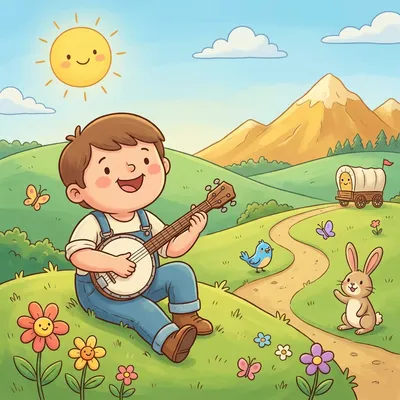
I come from AlabamaWith my banjo on my knee,I'm going to Louisiana,My true love for to see.Oh! Susanna,Oh don't you cry for me,For I come from AlabamaWith my banjo on my knee.
History and Meaning
Stephen Foster wrote "Oh! Susanna" around 1846, and within a few years it was the unofficial anthem of the California Gold Rush, bawled out by forty-niners crossing the continent with verses of their own invention. At heart it is a nonsense song: the narrator hauls a banjo from Alabama to Louisiana to find his true love, and the logic does not bear much inspection.
Origins
The song was written by Stephen Foster, who is often called the "Father of American Music." Foster composed it around 1846 while working as a bookkeeper in Cincinnati, Ohio. The song received its public debut in Pittsburgh, Pennsylvania, in September 1847 and was published in 1848. Foster, inexperienced in the music business, sold the rights to a publisher for a small sum, which meant he earned little money from its subsequent success, despite its widespread piracy by other publishers.
The Gold Rush Anthem
Shortly after its publication, the song was adopted by the "forty-niners," the thousands of prospectors who traveled to California during the California Gold Rush of 1849. The travelers adapted the lyrics, adding new verses describing their journey and their hopes of striking it rich. The song's energetic banjo-driven rhythm made it a perfect traveling song, and it quickly spread across the country and around the globe.
Who wrote the song "Oh! Susanna"?
The song was written by Stephen Foster, who composed both the music and the lyrics. He was one of America's first professional songwriters, also famous for composing classics like "Camptown Races" and "My Old Kentucky Home."
How did "Oh! Susanna" become connected to the California Gold Rush?
Prospectors traveling westward to California in 1849 adopted "Oh! Susanna" as their unofficial anthem. They sang it to keep up their spirits during the difficult journey, often changing the lyrics to describe their search for gold and their travels across the American continent.
Lyrics from nurseryrhymes.info