
This Old Man


Lyrics
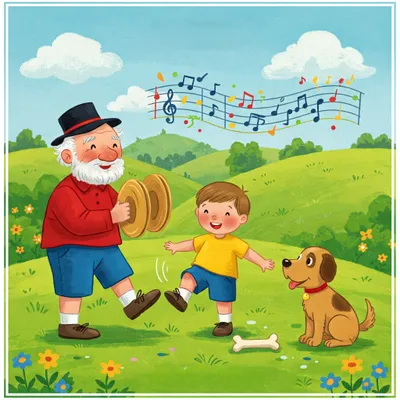
This old man, he played one,He played knick-knack on my thumb;With a knick-knack paddywhack,Give a dog a bone,This old man came rolling home.
This old man, he played two,He played knick-knack on my shoe;With a knick-knack paddywhack,Give a dog a bone,This old man came rolling home.
This old man, he played three,He played knick-knack on my knee;With a knick-knack paddywhack,Give a dog a bone,This old man came rolling home.
This old man, he played four,He played knick-knack on my door;With a knick-knack paddywhack,Give a dog a bone,This old man came rolling home.
This old man, he played five,He played knick-knack on my hive;With a knick-knack paddywhack,Give a dog a bone,This old man came rolling home.
This old man, he played six,He played knick-knack on my sticks;With a knick-knack paddywhack,Give a dog a bone,This old man came rolling home.
This old man, he played seven,He played knick-knack up in Heaven;With a knick-knack paddywhack,Give a dog a bone,This old man came rolling home.
This old man, he played eight,He played knick-knack on my gate;With a knick-knack paddywhack,Give a dog a bone,This old man came rolling home.
This old man, he played nine,He played knick-knack on my spine;With a knick-knack paddywhack,Give a dog a bone,This old man came rolling home.
This old man, he played ten,He played knick-knack over again;With a knick-knack paddywhack,Give a dog a bone,This old man came rolling home.
History and Meaning
"This Old Man" counts to ten by rhyming each number with where the old man plays "knick-knack": one on my thumb, two on my shoe, on up to ten. Nobody is quite sure what "knick-knack paddywhack" means, though "paddywhack" may be a dried cattle ligament once sold as a dog chew, which would fit the line "give a dog a bone."
Origins
The song is a piece of traditional folklore, with roots in nineteenth-century England. A notable early variant titled "Jack Jintle" was recorded by folklorist Anne Gilchrist, who recalled hearing it from her Welsh nurse in the 1870s. Gilchrist published her version in the Journal of the English Folk Dance and Song Society in 1937.
The standard modern version of the song was collected by Cecil Sharp and Sabine Baring-Gould and published in their 1906 book English Folk-Songs for Schools. The song reached a wider international audience when it was arranged as "The Children's Marching Song" for the 1958 film The Inn of the Sixth Happiness, which starred Ingrid Bergman.
Meaning & Interpretation
The lyrics are built on a series of numbered rhymes, where the old man plays "knick-knack" on various body parts and objects (such as a thumb, shoe, knee, or gate) before "rolling home." The meaning of the phrase "knick-knack paddywhack" has sparked several historical interpretations. One theory connects it to the rhythmic tapping sound made by folk musicians playing bones or spoons. Another theory suggests that "paddywhack" refers to a dried ligament from cattle, which was traditionally sold as a cheap dog treat, correlating with the lyric "give a dog a bone."
Today, the song is primarily used as an educational activity. Children tap their fingers, tap their shoes, or touch their knees to match each verse's number, developing fine motor skills, counting capability, and pattern recognition.
What is the origin of the song This Old Man?
The song is a traditional English counting rhyme. The first complete modern version was published in 1906 in Cecil Sharp's English Folk-Songs for Schools.
What does knick-knack paddywhack mean?
The phrase is a nonsense refrain. It likely refers to the tapping sounds of traditional rhythm instruments like bones or spoons. Some theories also link "paddywhack" to a traditional dried beef ligament treat given to dogs.
Music Video
If the player is unavailable, watch this video on YouTube.
Free Printable Coloring Page
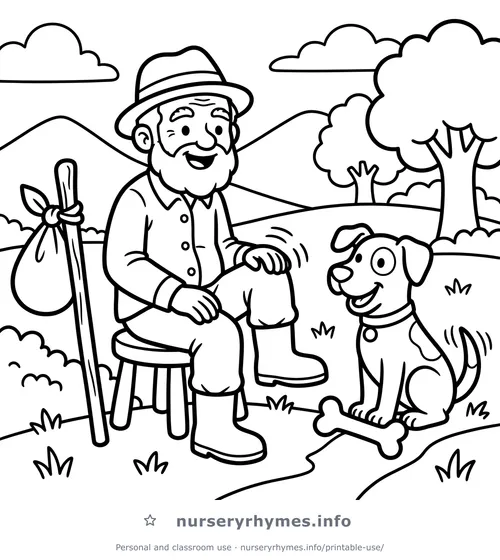
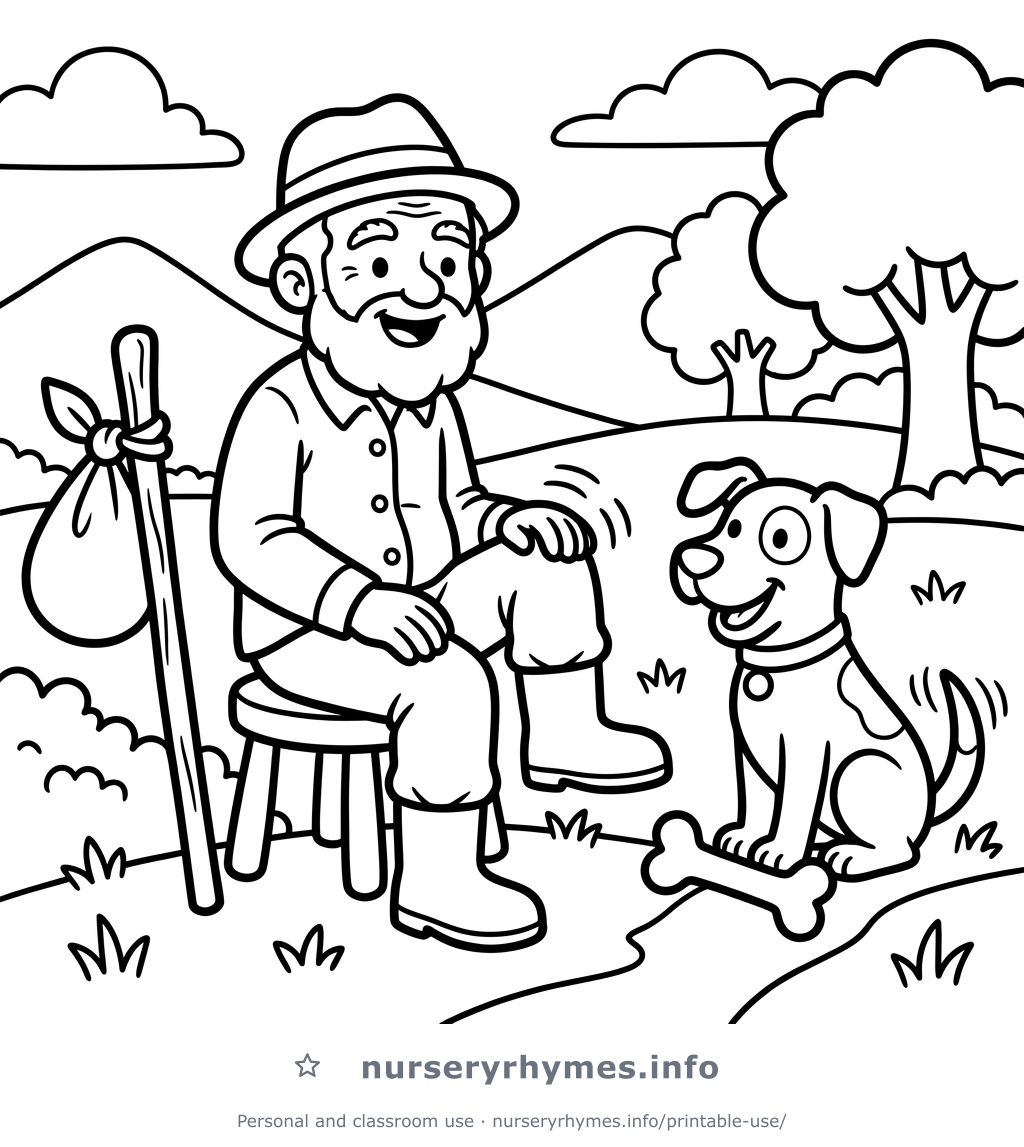
Print this This Old Man coloring sheet for free and let little ones bring it to life with crayons or pencils.
Full-resolution PNG · Fits the paper size selected in your print dialog · Personal and classroom use
Related Nursery Rhymes
Lyrics from nurseryrhymes.info