

Bulbul Ka Baccha
 Pakistan/India
 Urdu Nursery Rhyme
Original Lyrics
بلبل کا بچہ، بلبل کا بچہ
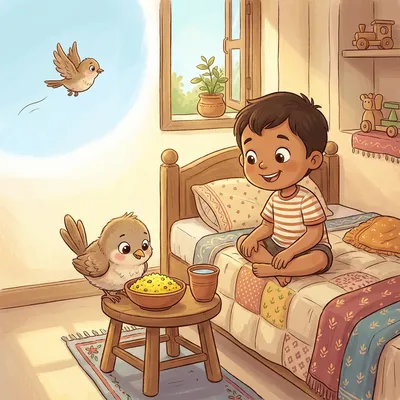
کھاتا تھا کھچڑی، پیتا تھا پانی
بلبل کا بچہ
گاتا تھا گانے، میرے سرہانے
بلبل کا بچہ، بلبل کا بچہ
ایک دن اکیلا بیٹھا ہوا تھا
میں نے اڑایا، واپس نہ آیا
بلبل کا بچہ، بلبل کا بچہ
---
Romanization:
Bulbul ka baccha, bulbul ka baccha
Khaata tha khichdi, peeta tha paani
Bulbul ka baccha
Gaata tha gaane, mere sirhaane
Bulbul ka baccha, bulbul ka baccha
Ek din akela baitha hua tha
Maine udaaya, waapis na aaya
Bulbul ka baccha, bulbul ka baccha
English Translation
Used to eat khichdi, used to drink water
The nightingale's child
Used to sing songs, by my bedside
The nightingale's child, the nightingale's child
One day it was sitting alone
I made it fly, it never came back
The nightingale's child, the nightingale's child
History and Meaning
"Bulbul Ka Baccha" is a melancholic yet beloved nursery rhyme that has touched the hearts of generations in Pakistan and India. The poem describes a child's relationship with a pet nightingale that eventually flies away and never returns.
The rhyme is notable for its emotional depth, teaching young children about themes of friendship, loss, and letting go. The repetition of "bulbul ka baccha" creates a haunting refrain that emphasizes the lingering memory of the lost bird.
Despite its sad ending, the song remains popular because it helps children process complex emotions in a gentle way. The simple melody and touching story make it memorable, and it's often one of the first Urdu poems children learn, introducing them to the rich tradition of Urdu poetry where the bulbul (nightingale) is a central symbol of beauty and song.