
Chidiya Rani

Urdu Nursery Rhyme
Original Lyrics
Urdu script
چڑیا رانی، چڑیا رانی، تم پرندوں کی رانیصبح صبح تم اٹھ جاتی ہو، میٹھی میٹھی گاتی ہوکیا تم بھی پڑھنے جاتی ہو، یا نوکری کرنے جاتی ہو؟شام سے پہلے آتی ہو، بچوں کا دانہ لاتی ہوبھر بھر چونچ کھلاتی دانہ، چو چو کرتی گاتی گاناچڑیا رانی، چڑیا رانی، تم پرندوں کی رانی
Romanized (pronunciation)
Chidiya rani, chidiya rani, tum parindon ki raniSubah subah tum uth jaati ho, meethi meethi gaati hoKya tum bhi padhne jaati ho, ya naukri karne jaati ho?Shaam se pehle aati ho, bacchon ka daana laati hoBhar bhar chonch khilaati daana, choo choo karti gaati gaanaChidiya rani, chidiya rani, tum parindon ki rani
English Translation
Little bird queen, little bird queen, you are the queen of birdsEarly in the morning you wake up, you sing so sweetlyDo you also go to school, or do you go to work?You come before evening, you bring food for the childrenYou fill your beak and feed them grain, chirping and singing songsLittle bird queen, little bird queen, you are the queen of birds
Translation Notes
Vocabulary
chidiya (چڑیا) - bird rani (رانی) - queen parindon (پرندوں) - birds (plural) subah (صبح) - morning gaati (گاتی) - sings (feminine) naukri (نوکری) - job, work daana (دانہ) - grain, food chonch (چونچ) - beak
Grammar Notes
The possessive "ki": parindon ki rani means "queen of the birds." The little word ki links owner to thing owned, like English "of" or apostrophe-s. It takes the form ki here because rani (queen) is feminine.
Feminine verb endings: because the bird is female, her verbs all end in -ti: gaati (sings), jaati (goes), aati (comes), laati (brings). A male subject would use -ta endings instead. The tum ... ho frame around them is the friendly "you" used with children and equals.
Reduplication: doubling a word adds intensity or "all over." subah subah is "first thing in the morning," meethi meethi is "ever so sweetly," and bhar bhar is "filling it again and again." This repeating trick is everywhere in Hindi and Urdu and makes rhymes especially fun to chant.
History and Meaning
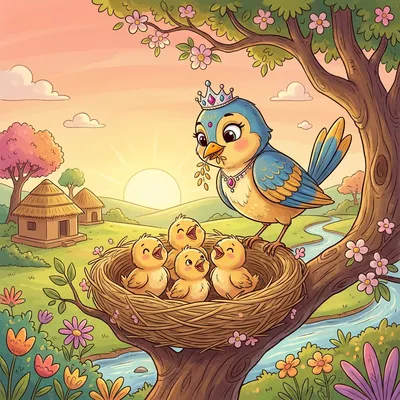
Chidiya Rani (Bird Queen) crowns an ordinary little bird as royalty, then shows her doing very un-royal work: up at dawn, singing, then flying back and forth all day to carry grain home to her chicks. A teasing line even asks whether she is off to school or to a job, just like the children's own parents. It is sung across Pakistan and India, usually with hand motions for the flying and feeding.
The rhyme is a staple of early childhood education in South Asia, popular for its gentle melody and theme of maternal care. It is often taught alongside simple hand motions that imitate a bird flying and feeding.
Origins
The song has its roots in the rich oral tradition of children's folk songs (known as "Balgeet") in South Asia. No specific author or date of composition is recorded for the rhyme, as it has been passed down orally through generations of families.
While the exact origin remains undocumented, the rhyme has been integrated into Urdu and Hindi primary school curricula and children's storybooks for decades. Modern digital versions and animated videos have helped maintain its popularity among the South Asian diaspora worldwide.
Meaning & Interpretation
The poem personifies the bird as a "queen" (rani) of the skies, but contrasts this regal title with her humble, diligent work. The third line asks the bird if she goes to school or to work, a playful question that helps children relate the bird's search for food to their own parents' daily routines.
By depicting the mother bird filling her beak to feed her young, the song teaches children about family responsibilities, natural habitats, and the concept of hard work.
What does the name Chidiya Rani mean?
Chidiya Rani translates directly to "Bird Queen" in Urdu and Hindi. In the context of the nursery rhyme, the title is an affectionate term that personifies a small bird, framing her daily efforts to care for her family as something noble and queen-like.
How does the Chidiya Rani poem teach children about nature?
The poem teaches children about the daily habits of birds, such as rising early, singing, and gathering food. By questioning whether the bird goes to school or work, it encourages children to observe wildlife and compare animal behaviours with human lives.
Lyrics from nurseryrhymes.info