
Do Chuhe The

Urdu Nursery Rhyme
Original Lyrics
Urdu script
دو چوہے تھے، موٹے موٹے تھے، چھوٹے چھوٹے تھےدونوں کھیل رہے تھےبلی نے دیکھا، بلی بولی "میاؤں!میں بھی آؤں، میں بھی آؤں؟"
نہیں ماسی، نہیں تم آؤ گیموچھ کھینچ ڈالو گیپونچھ کاٹ ڈالو گیہمیں مار ڈالو گیہم تو نہیں آئیں گے، ہم بھاگ جائیں گے!
Romanized (pronunciation)
Do chuhe the, mote mote the, chhote chhote theDono khel rahe theBilli ne dekha, billi boli "Meow!Main bhi aaoon, main bhi aaoon?"
Nahi maasi, nahi tum aaogiMooch kheench daalogiPoonch kaat daalogiHumein maar daalogiHum to nahi aayenge, hum bhaag jaayenge!
English Translation
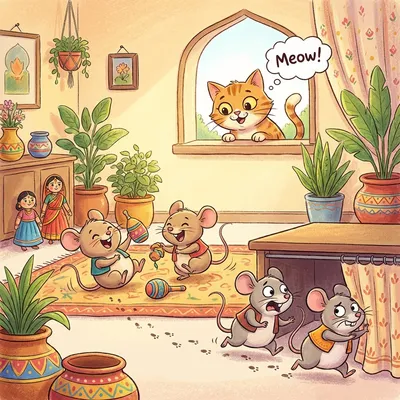
There were two mice, they were fat, they were smallBoth were playingThe cat saw them, the cat said "Meow!Shall I also come, shall I also come?"
"No, Auntie Cat, you won't comeYou will pull our whiskersYou will cut our tailsYou will kill usWe will not come, we will run away!"
Translation Notes
Vocabulary
do (دو) - two chuhe (چوہے) - mice mote (موٹے) - fat, plump chhote (چھوٹے) - small, tiny billi (بلی) - cat mooch (موچھ) - whiskers, mustache poonch (پونچھ) - tail bhaag (بھاگ) - run
Grammar Notes
Past continuous: khel rahe the means "were playing." The rahe the part marks an action that was going on, like English "was/were -ing." You will hear rahe the attached to many verbs to set a scene in the past.
Future tense and gender: the mice's warnings all point ahead in time: aaogi (you will come), daalogi (you will do), aayenge (we will come), bhaag jaayenge (we will run). The endings change with gender and number, so the cat, addressed as maasi (auntie), gets the feminine -ogi, while the two mice speak of themselves with the plural -enge.
The "ne" construction: in billi ne dekha (the cat saw), the doer billi takes the marker ne. With completed past actions of many verbs, Urdu and Hindi tag the subject this way, an ergative pattern that often surprises learners.
Reduplication: mote mote ("nice and fat") and chhote chhote ("tiny little") double a word for emphasis, a favourite trick in children's rhymes.
History and Meaning
Do Chuhe The (There Were Two Mice) is a tiny drama you act out with your hands. Two fat little mice are playing when a cat sidles up and sweetly asks to join in. The mice, who know exactly how this ends, reel off everything the cat would do to them, pull our whiskers, cut our tails, kill us, and bolt. It is a nursery favourite across Pakistan and India, performed with big gestures.
The rhyme is a favorite in South Asian kindergartens and playgroups. It is typically performed with dramatic gestures, where children pretend to be the mice and the cat.
Origins
The song has its origins in the oral folklore of Northern India and Pakistan. Like many traditional play-party songs, it has no known author or date of first publication, having been passed down verbally through families.
Over the years, the rhyme has evolved, with parents and educators adapting the lyrics to include modern activities like eating pizza or going to school. However, the core confrontation between the mice and the cat remains the most popular version.
Meaning & Interpretation
The song serves as an early safety fable for children. By depicting the mice immediately identifying the danger posed by the cat ("You will pull our whiskers, you will cut our tails"), the rhyme teaches children to be cautious when dealing with individuals who may wish them harm.
The cat's polite request ("Shall I also come?") is met with realistic skepticism. The mice's decision to run away is presented as a smart, self-protective choice, delivering a valuable lesson about caution in a lighthearted, non-threatening format.
What does the story of Do Chuhe The teach children?
The rhyme is a fable that teaches young children about caution and self-preservation. It encourages them to recognize potential dangers and walk away from situations or individuals that seem untrustworthy, just as the mice choose to run away from the cat.
What are the common actions for the Do Chuhe The rhyme?
Children typically hold up two fingers to represent the mice, roll their hands to show the mice are "fat," make whispering gestures for the cat's "meow," pull their cheeks to show whiskers being pulled, and run their feet in place to mimic the mice escaping at the end.
Lyrics from nurseryrhymes.info