
Who Killed Cock Robin?
 1744
1744  England
 Lyrics
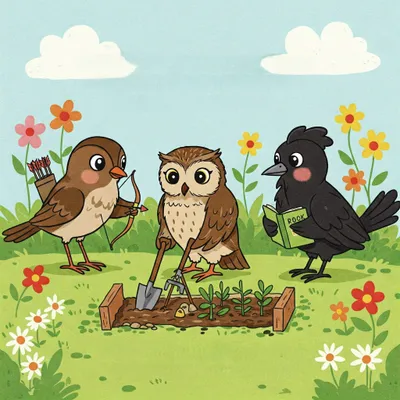
I, said the Sparrow,
with my bow and arrow,
I killed Cock Robin.
Who saw him die?
I, said the Fly,
with my little teeny eye,
I saw him die.
Who caught his blood?
I, said the Duck,
it was just my luck,
I caught his blood.
Who'll make the shroud?
I, said the Beetle,
with my thread and needle,
I'll make the shroud.
Who'll dig his grave?
I, said the Owl,
with my pick and trowel,
I'll dig his grave.
Who'll be the parson?
I, said the Rook,
with my little book,
I'll be the parson.
Who'll be the clerk?
I, said the Lark,
if it's not in the dark,
I'll be the clerk.
Who'll carry the link?
I, said the Linnet,
I'll fetch it in a minute,
I'll carry the link.
Who'll be chief mourner?
I, said the Dove,
I mourn for my love,
I'll be chief mourner.
Who'll carry the coffin?
I, said the Kite,
if it's not through the night,
I'll carry the coffin.
Who'll bear the pall?
I, said the Crow,
with the cock and the bow,
I’ll bear the pall.
Who'll sing a psalm?
I, said the Thrush,
as she sat on a bush,
I'll sing a psalm.
Who'll toll the bell?
I, said the Bull,
because I can pull,
I'll toll the bell.
All the birds of the air
fell a-sighing and a-sobbing,
when they heard the bell toll
for poor Cock Robin.
History and Meaning
"Who Killed Cock Robin?" is an English folk song with macabre origins dating back centuries. The earliest known published version appeared in "Tommy Thumb's Pretty Song Book" in 1744, though only featuring the first four verses—the complete extended version became widely available around 1770. Evidence suggests the theme predates its 18th-century publication: a 15th-century stained glass window in Buckland Rectory, Gloucestershire, depicts a robin killed by an arrow. A popular theory links the rhyme to the political downfall of Robert Walpole's government in 1742, since "Robin" was a common nickname for Robert and the publication followed closely. Other interpretations connect it to Norse mythology (the death of Balder, god of summer), ancient pagan rituals involving the sacrifice of a "year king," or even the death of King William II (William Rufus) who was killed by an arrow while hunting in 1100. The robin redbreast holds significant symbolism in British folklore, often associated with death and misfortune—harming a robin is considered bad luck, while its red breast is explained through Christian legends of the robin trying to comfort Christ during his crucifixion.