

Willy Boy


Lyrics
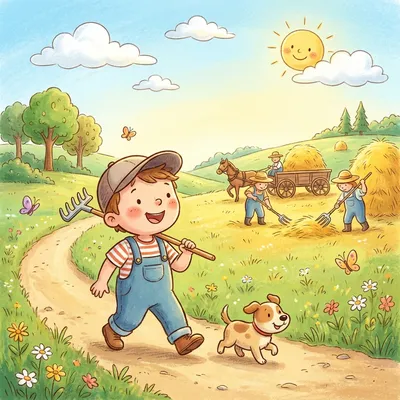
Willy boy, Willy boy, where are you going?I will go with you, if that I may.I'm going to the meadow to see them a-mowing,I'm going to help them to make the new hay.
History and Meaning
A child asks Willy Boy where he is off to and tags along: he is going to the meadow to help with the haymaking. The whole rhyme is that brief, sunlit exchange, a snapshot of the summer work that once pulled in entire farming families. Benjamin Britten thought enough of it to set it to music.
Origins
The song has its roots in traditional English oral folklore. The earliest documented printed version of the rhyme was published in 1881 in Kate Greenaway's landmark illustrated book Mother Goose or the Old Nursery Rhymes. While older variations of the verse likely existed in the English countryside, Greenaway's illustrations and printing helped popularize the song for a wider audience. It was later included in other early twentieth-century anthologies, such as The Little Mother Goose in 1912.
Meaning & Interpretation
The lyrics directly reflect the agricultural traditions of pre-industrial Britain. The narrator asks Willy Boy where he is going, and then asks to accompany him. Willy Boy responds that he is going to the meadow to watch the mowers and help them make "new hay." Historically, haymaking was a vital summer activity for farming communities, requiring the cooperation of entire families, including children, to harvest and dry the grass before winter. The song captures a child's natural curiosity and desire to participate in these seasonal community events. The prominent English composer Benjamin Britten later set the rhyme to music as part of his collection of traditional children's songs.
What is the origin of Willy Boy?
The rhyme is a traditional English country song first published in print in London in 1881 within Kate Greenaway's book Mother Goose or the Old Nursery Rhymes.
What does the Willy Boy rhyme describe?
The rhyme describes a child's walk to a rural meadow to watch workers mow grass and to help them turn it into hay, reflecting traditional agricultural practices of nineteenth-century England.
Lyrics from nurseryrhymes.info