
Lakdi Ki Kathi
 1983
1983  India
India Hindi Nursery Rhyme
Original Lyrics
लकड़ी की काठी, काठी पे घोड़ा,
घोड़े की दुम पे जो मारा हथौड़ा,
दौड़ा दौड़ा दौड़ा घोड़ा, दुम उठा के दौड़ा।
Romanized (Latin script):
Lakdi ki kaathi, kaathi pe ghoda,
Ghode ki dum pe jo maara hathauda,
Dauda dauda dauda ghoda, dum utha ke dauda.
English Translation
When the hammer struck the horse's tail,
The horse ran, ran, ran, with its tail held high it ran.
Translation Notes
Line-by-Line Translation
लकड़ी की काठी (Lakdi ki kaathi) — "A frame of wood" - लकड़ी (lakdi) = wood - की (ki) = of - काठी (kaathi) = wooden frame/saddle
काठी पे घोड़ा (Kaathi pe ghoda) — "A horse on the frame" - पे (pe) = on - घोड़ा (ghoda) = horse
घोड़े की दुम पे जो मारा हथौड़ा (Ghode ki dum pe jo maara hathauda) — "When the hammer struck the horse's tail" - दुम (dum) = tail - जो (jo) = when/which - मारा (maara) = struck/hit - हथौड़ा (hathauda) = hammer
दौड़ा दौड़ा दौड़ा घोड़ा (Dauda dauda dauda ghoda) — "The horse ran, ran, ran" - दौड़ा (dauda) = ran (repetition for emphasis)
दुम उठा के दौड़ा (Dum utha ke dauda) — "With its tail held high it ran" - उठा के (utha ke) = lifting/raising
Line-by-Line Translation
लकड़ी की काठी (Lakdi ki kaathi) — "A frame of wood" - लकड़ी (lakdi) = wood - की (ki) = of - काठी (kaathi) = wooden frame/saddle
काठी पे घोड़ा (Kaathi pe ghoda) — "A horse on the frame" - पे (pe) = on - घोड़ा (ghoda) = horse
घोड़े की दुम पे जो मारा हथौड़ा (Ghode ki dum pe jo maara hathauda) — "When the hammer struck the horse's tail" - दुम (dum) = tail - जो (jo) = when/which - मारा (maara) = struck/hit - हथौड़ा (hathauda) = hammer
दौड़ा दौड़ा दौड़ा घोड़ा (Dauda dauda dauda ghoda) — "The horse ran, ran, ran" - दौड़ा (dauda) = ran (repetition for emphasis)
दुम उठा के दौड़ा (Dum utha ke dauda) — "With its tail held high it ran" - उठा के (utha ke) = lifting/raising
History and Meaning
"Lakdi Ki Kathi" (लकड़ी की काठी) is one of the most iconic Hindi children's songs, beloved by generations of Indian children. The song originated from the 1983 Bollywood film "Masoom" (Innocent), directed by Shekhar Kapur.
Creative Team
The lyrics were penned by the legendary poet and lyricist Gulzar, known for his simple yet profound words that resonate with both children and adults. The music was composed by the renowned Rahul Dev Burman (R.D. Burman), one of Bollywood's most celebrated music directors. The song was sung by three child artists: Gauri Bapat, Gurpreet Kaur, and Vanita Mishra, and was picturized on child actors Urmila Matondkar and Jugal Hansraj in the film.
The Story
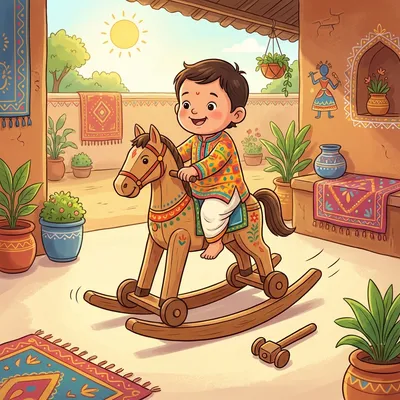
The song playfully narrates the adventures of a wooden toy horse (lakdi ka ghoda). With its catchy tune and imaginative lyrics, the song takes children on a delightful journey through the horse's escapades - visiting the market square where a barber tries to shave it, getting cold in the snowy vegetable market, and proudly proclaiming itself to be a strong Arabian horse.
The repetitive phrase "दौड़ा दौड़ा दौड़ा" (dauda dauda dauda - ran, ran, ran) creates an energetic, galloping rhythm that perfectly captures the spirit of a playful toy horse, making it irresistible for children to sing along and dance.
Impact and Legacy
Released in 19 83, "Lakdi Ki Kathi" quickly became an iconic part of Hindi cinema and children's music culture. While it may not carry a deep moral lesson, its rhyming nature helps children navigate Hindi language patterns and teaches cause and effect through its playful narrative.
For adults, the song serves as a powerful nostalgic trigger, reminding them of the purity, joy, and carefree days of childhood. It evokes a sense of wonder and the boundless imagination that children possess when playing with simple toys.
The song has transcended its film origins to become a timeless children's rhyme in its own right, regularly sung in schools, homes, and children's programs across India. Its enduring popularity is a testament to Gulzar's skill in crafting verses that capture the essence of childhood wonder.
About the Song
This playful rhyme describes the adventures of a wooden toy horse. The song uses imagination and repetitive words (दौड़ा दौड़ा/dauda dauda) to create a lively, energetic feel that children love. The catchy tune helps children learn Hindi through music and rhythm.