

I Do Not Like Thee, Doctor Fell


Lyrics
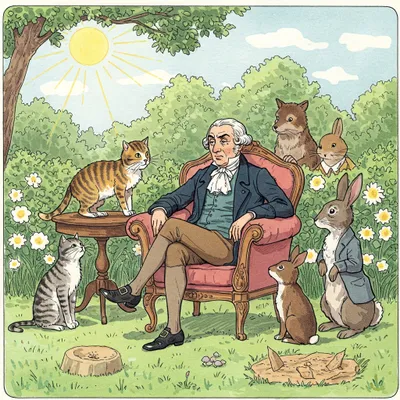
I do not like thee, Doctor Fell,The reason why, I cannot tell;But this I know, and know full well,I do not like thee, Doctor Fell.
History and Meaning
An Oxford student named Tom Brown faced expulsion until his dean offered a way out: translate a Latin epigram on the spot. Brown's translation became "I Do Not Like Thee, Doctor Fell," a four-line jab at the very dean who set the test. It is one of the few nursery rhymes with a fully documented origin.
Who was Tom Brown?
The verse is attributed to Tom Brown (1663 to 1704), an English satirist who composed it around 1680 while studying at Christ Church, Oxford University. The poem was first published in Brown's Laconics: or, New Maxims of State and Conversation in 1701.
Who was Doctor John Fell?
The subject of the epigram was John Fell (1625 to 1686), who was the Dean of Christ Church and later became the Bishop of Oxford. Fell was known for his strict discipline and his dedication to the university, though his stern manner made him unpopular with some students.
What is the legend behind the creation of the rhyme?
According to a famous anecdote, Dean Fell caught Tom Brown engaged in some mischief and threatened him with expulsion from the university. As a condition to avoid punishment, Fell challenged Brown to produce an extemporaneous translation of a Latin epigram by the Roman poet Martial.
Martial's original lines (Epigrammata 1.32) read:
"Non amo te, Sabidi, nec possum dicere quare; Hoc tantum possum dicere, non amo te."
This translates to: "I do not love you, Sabidius, nor can I say why; this alone I can say: I do not love you."
How did Tom Brown respond to the Dean's challenge?
Brown's witty English rendition substituted Dean Fell's name:
"I do not like thee, Doctor Fell, The reason why, I cannot tell; But this I know, and know full well, I do not like thee, Doctor Fell."
This clever adaptation reportedly satisfied the challenge and allowed Brown to avoid expulsion, while simultaneously immortalizing his disdain for the strict dean in literary history.
How did the epigram become a nursery rhyme?
The verse's cleverness, brevity, and memorable rhyme scheme led to its enduring popularity. By the early twentieth century, it had entered English folklore as a traditional nursery rhyme. It has also been recognized as a proverb expressing inexplicable dislike for someone, often referred to as a "Doctor Fell feeling."
What does 'Doctor Fell' mean in modern language?
The phrase "Doctor Fell" has become synonymous with an irrational or unexplainable antipathy toward someone. The rhyme has been referenced in literature, psychology, and popular culture as shorthand for feelings of dislike that cannot be logically explained.
Music Video
If the player is unavailable, watch this video on YouTube.
Lyrics from nurseryrhymes.info