

If Wishes Were Horses, Beggars Would Ride


Lyrics
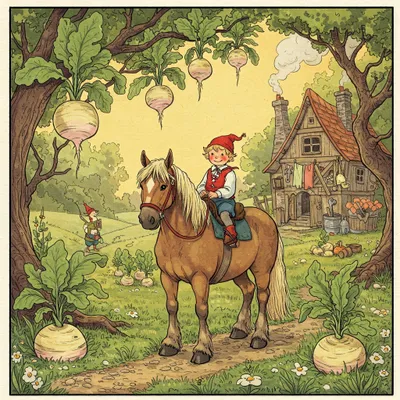
If wishes were horses, beggars would ride.If turnips were watches, I'd wear one by my side.If "ifs" and "ands" were pots and pans,There'd be no work for tinkers' hands.
History and Meaning
If wishing could make things happen, the proverb runs, even beggars would own horses, so wishing is clearly not enough. The rhyme stacks up more of the same: turnips that are not watches, "ifs" and "ands" that are not pots and pans. The point is that effort beats hope.
What is the meaning of the proverb 'If wishes were horses beggars would ride'?
The proverb emphasizes that wishing alone cannot bring about desired results, meaning that practical effort is essential to achieve one's goals. If simply wishing could make things happen, even the most destitute individuals would have everything they wanted.
When was the saying first recorded?
The recognizable ancestor of this rhyme first appeared in William Camden's Remaines of a Greater Worke, Concerning Britaine, printed in 1605. This early version was phrased quite differently:
"If wishes were thrushes, beggars would eat birds."
This version focused on food scarcity rather than transportation, but carried the same essential meaning.
How did the wording of the proverb evolve?
The phrase evolved over two centuries:
- 1628: James Carmichael's "Proverbs in Scots" introduced the reference to horses: "And wishes were horses, pure [poor] men wald ride."
- 1670: John Ray's "Collection of English Proverbs" introduced the word "beggars": "If wishes would bide, beggars would ride."
- 1721: James Kelly's "Scottish Proverbs, Collected and Arranged" presented the wording closest to the modern version: "If wishes were horses, beggars would ride."
How did the proverb become a nursery rhyme?
The saying was widely disseminated as a nursery rhyme in collections like James Orchard Halliwell's "The Nursery Rhymes of England" in the 1840s. Extended versions sometimes include additional whimsical lines such as:
"If turnips were watches, I'd wear one by my side." "And if 'ifs' and 'ands' were pots and pans, there'd be no work for tinkers."
What is the historical context of the proverb?
The proverb reflects a historical emphasis on realism over fantasy. In an era when horses symbolized wealth, status, and mobility, the ability to ride was far beyond the means of the poor. Beggars were among the lowest in society, so the image of them riding horses represented an absurd impossibility, making it a perfect illustration of wishful thinking versus reality.
Why has the proverb remained popular?
The phrase remains in common use today, often invoked when someone indulges in wishful thinking rather than taking practical action. It continues to teach children and adults the value of effort over mere hope.
Music Video
If the player is unavailable, watch this video on YouTube.
Lyrics from nurseryrhymes.info