
If You're Happy and You Know It

Lyrics
If you're happy and you know it clap your handsIf you're happy and you know it clap your handsIf you're happy and you know it and you really want to show itIf you're happy and you know it clap your hands
If you're happy and you know it stomp your feetIf you're happy and you know it stomp your feetIf you're happy and you know it and you really want to show itIf you're happy and you know it stomp your feet
If you're happy and you know it shout hurrayIf you're happy and you know it shout hurrayIf you're happy and you know it and you really want to show itIf you're happy and you know it shout hurray
If you're happy and you know it do all threeIf you're happy and you know it do all threeIf you're happy and you know it and you really want to show itIf you're happy and you know it do all three
History and Meaning
"If You're Happy and You Know It" only works if everyone joins in: clap your hands, stomp your feet, shout hooray, then do all three at once. Each verse names a happy action and dares the room to perform it, which makes it one of the most reliable ways to get a group of children moving together.
What are the origins of If You're Happy and You Know It?
The precise origins of the song are not definitively known. Some music historians suggest possible folk roots in Spain, Latin America, or Latvia, but no definitive pre-twentieth-century documentation exists. The melody bears a notable resemblance to "Molodejnaya," a tune composed by Isaak Dunayevsky for the 1938 Soviet musical film "Volga-Volga."
When was the song first published in English?
The song's earliest known publication in English appeared in 1957 within Richard G. Kraus's "Play Activities for Boys and Girls, Six Through Twelve: A Guide for Teachers, Parents, and Recreation Leaders." Its popularity grew throughout the 1960s, appearing in various children's rhyme books and educational materials.
Who holds the copyright to the song?
In 1971, Jonico Music filed a copyright registration for a version of the song, crediting composer Joe Raposo, a key figure in "Sesame Street" production. However, Raposo did not originate the tune itself; the registration likely covered a specific arrangement rather than the original composition.
What actions are performed during the song?
The song's enduring appeal lies in its participatory nature. Children are invited to express their happiness through physical actions:
- Clapping hands
- Stomping feet
- Shouting "Hooray!" or "Hurrah!"
- Various other movements in extended versions
The call-and-response structure makes it ideal for group settings, encouraging children to listen, respond, and move together.
What is the educational value of the song?
The song serves multiple developmental purposes:
- Emotional expression: Encourages children to recognize and express feelings.
- Gross motor skills: The actions develop coordination and body awareness.
- Social interaction: Singing together builds community and shared experience.
- Following instructions: Children learn to listen and respond appropriately.
What are some international versions of the song?
The song is known worldwide and performed in many languages. In Spanish-speaking countries, it is sung as "Si eres feliz y lo sabes" or "Si te sientes muy feliz," demonstrating its universal appeal across cultures and languages.
Why has the song remained popular over time?
At its heart, the song celebrates the simple pleasure of expressing happiness. Its message, that joy should be shared and shown, resonates with children and adults alike, making it a staple of classrooms, camps, and family gatherings worldwide.
Music Video
If the player is unavailable, watch this video on YouTube.
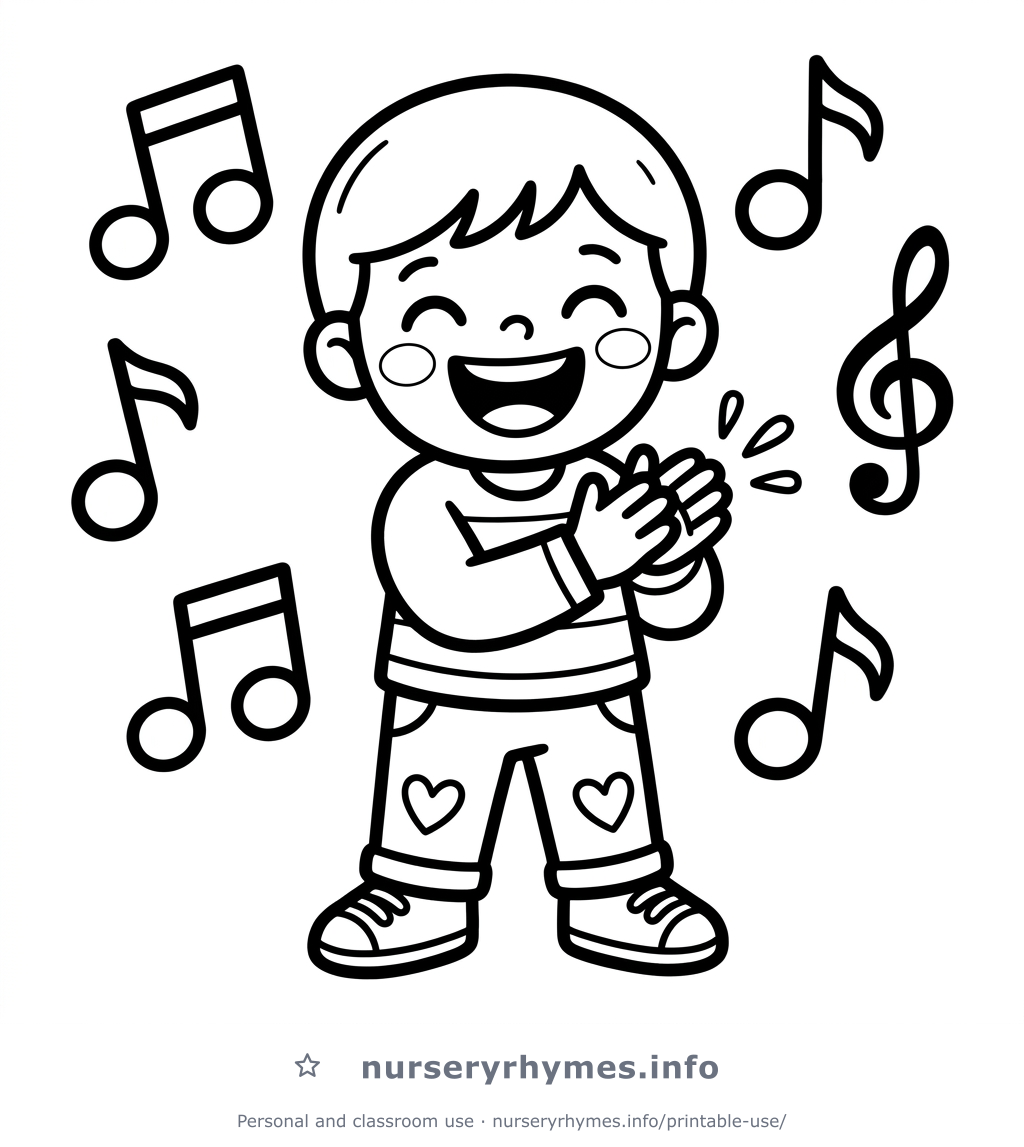
Free Printable Coloring Page
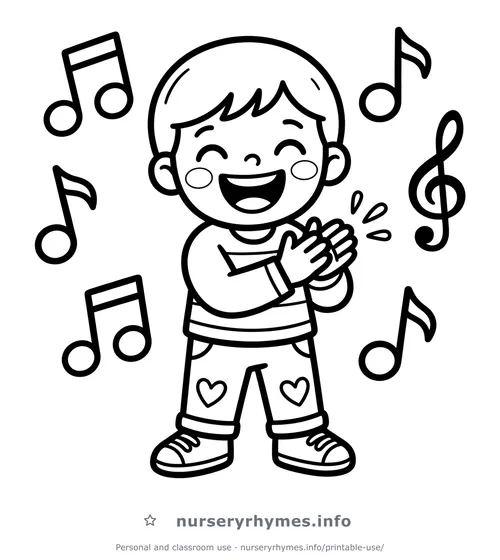
Print this If You're Happy and You Know It coloring sheet for free and let little ones bring it to life with crayons or pencils.
Full-resolution PNG · Fits the paper size selected in your print dialog · Personal and classroom use
Related Nursery Rhymes


Lyrics from nurseryrhymes.info