

The Skye Boat Song


Lyrics
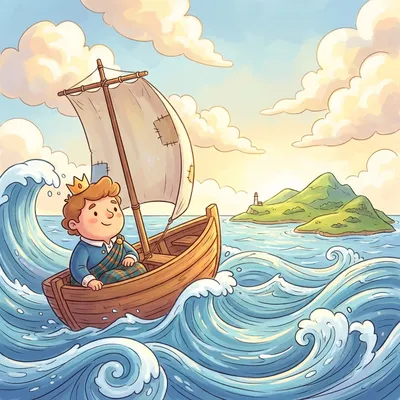
Speed, bonnie boat, like a bird on the wing,Onward! the sailors cry;Carry the lad that's born to be KingOver the sea to Skye.
Loud the winds howl, loud the waves roar,Thunderclouds rend the air;Baffled, our foes stand by the shore,Follow they will not dare.
History and Meaning
"The Skye Boat Song" rows a real fugitive to safety: Bonnie Prince Charlie, fleeing across the water to the Isle of Skye after the Jacobites' crushing defeat at Culloden in 1746. The words are Victorian, written in 1884 to an old Gaelic rowing tune, and the song's gentle sway has since made it a lullaby.
Origins
The song describes events from the Jacobite rising of 1745. Following his defeat at the Battle of Culloden in 1746, Prince Charles Edward Stuart, also known as Bonnie Prince Charlie, fled from government forces. A young Scottish woman named Flora MacDonald helped him escape by disguising him as her Irish spinning maid, Betty Burke, and sailing him from the island of Benbecula to the Isle of Skye. More than a century later, in 1884, Sir Harold Boulton wrote the English lyrics to a traditional Gaelic melody collected by Anne Campbell MacLeod, and the song was published in the collection Songs of the North.
Meaning & Interpretation
The lyrics play up the drama of the prince's flight. The stormy winds, roaring waves, and loud thunder represent the dangerous elements, while the foes standing baffled on the shore symbolize the pursuing British forces who dare not follow. Despite its military and political background, the song's slow, flowing melody has made it popular as a soothing nursery lullaby.
What historical event is the "Skye Boat Song" about?
The song is about the escape of Prince Charles Edward Stuart (Bonnie Prince Charlie) after the defeat of the Jacobite army at the Battle of Culloden in 1746. It commemorates his flight to the Isle of Skye with the assistance of Flora MacDonald.
Who wrote the lyrics to the "Skye Boat Song"?
The English lyrics were written by Sir Harold Boulton in 1884. He set his words to a traditional Gaelic rowing air collected by Anne Campbell MacLeod, who had heard boatmen singing the melody in the Scottish Hebrides.
Lyrics from nurseryrhymes.info