

Git Along, Little Dogies


Lyrics
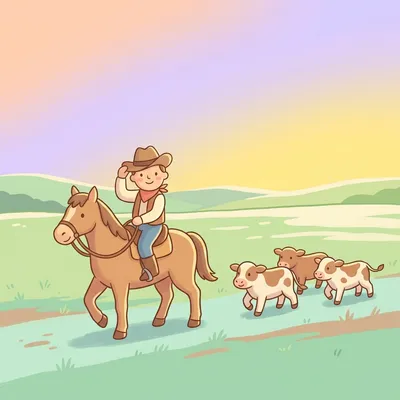
As I walked out one morning for pleasure,I spied a cow-puncher all riding alone;His hat was throwed back and his spurs was a jingling,As he approached me a-singin' this song,
Chorus
Whoopee ti yi yo, git along little dogies,It's your misfortune, and none of my own.Whoopee ti yi yo, git along little dogies,For you know Wyoming will be your new home.
Early in the spring we round up the dogies,Mark and brand and bob off their tails;Round up our horses, load up the chuck-wagon,Then throw the dogies upon the trail.
When the night comes on and we hold them on the bedground,These little dogies that roll on so slow;Roll up the herd and cut out the strays,And roll the little dogies that never rolled before.
Your mother she was raised way down in Texas,Where the jimson weed and sand-burrs grow;Now we'll fill you up on prickly pear and chollaTill you are ready for the trail to Idaho.
History and Meaning
A dogie is a motherless calf, and this is a song men sang to them. In the introduction to Cowboy Songs and Other Frontier Ballads (1910), the collector John A. Lomax described night-guards circling a bedded herd and improvising "cattle lullabies which quieted the animals and soothed them to sleep". Some of the best "dogie songs", he wrote, were made specifically to prevent stampedes. This is the one that survived best.
Lomax headed it "Whoopee Ti Yi Yo, Git Along Little Dogies", and both halves of that title are still in use. It is a trail-drive song, sung to calves walked north out of Texas, which is why the chorus keeps promising them Wyoming.
Origins
The 1910 printing is the first publication of the words and melody together, though the song was already circulating: the novelist Owen Wister noted a cowboy version in his journal in 1893. Theodore Roosevelt sent Lomax a letter of support from Cheyenne dated August 28, 1910, which the book prints at the front.
A frequently repeated suggestion traces the tune to an Irish ballad about an old man rocking a cradle. The cradle imagery makes that appealing, but the link is not documented, so treat it as a suggestion rather than settled fact. Harry "Mac" McClintock made the first commercial recording in 1929.
Lomax's version closes with a further verse about the calves ending up as beef, phrased with a racial term for Native Americans that singers dropped long ago.
Meaning & Interpretation
The singer is talking to the animals, not about them. The verses follow a real working year: spring roundup, marking and branding, loading the chuck-wagon, then months on the trail. "Your mother she was raised way down in Texas" is literal, since herds were bred there and driven north to Wyoming, Idaho and Montana. Jimson weed, sand-burrs, prickly pear and cholla are genuine Southwestern range plants.
How the song lands depends on tempo. Slow, it is a lullaby, which is how it reached nurseries. Brisk, it is a work chant for moving stubborn animals.
What is a dogie?
A dogie is a motherless or runty calf in cowboy slang, recorded from around 1887. The origin of the word is unknown. Ramon F. Adams proposed that calves weaned too early developed swollen bellies resembling sourdough carried in a sack, making them "dough-guts", later shortened to dogie. Others point to the Spanish dogal, a lariat, or to a variant pronunciation of "doggie". None is proven. It is said DOE-ghee and has nothing to do with dogs.
Why did cowboys sing to cattle at night?
To keep them calm. Lomax wrote that night-guards circling a bedded herd sang steadily so the cattle heard a familiar human sound rather than being startled by a sudden noise in the dark. A spooked herd could stampede, which endangered both the animals and the riders. That practical purpose explains why so many trail songs move at a walking pace and repeat themselves.
What does "It's your misfortune and none of my own" mean?
The cowboy is telling the calf that being orphaned and driven a thousand miles is its own bad luck, not the rider's doing and not the rider's to mend. Historian Richard White took the line as the title of his 1991 history of the American West, using it for the way westward settlement handed out hardship unevenly.
Related Nursery Rhymes


Lyrics from nurseryrhymes.info