
Hark Hark the Dogs Do Bark


Lyrics
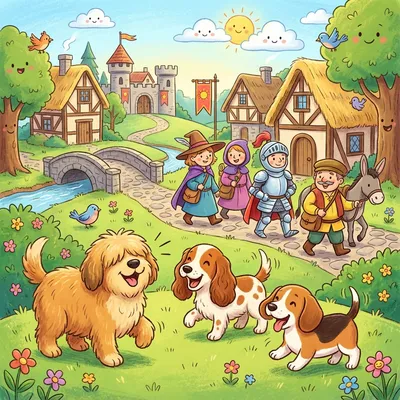
Hark, hark,The dogs do bark,Beggars are coming to town;Some in jags,Some in rags,And some in velvet gowns.
History and Meaning
Dogs bark, and a ragged procession files into town: some in rags, some in fine velvet gowns. In six short lines the rhyme sketches a whole social order arriving at the gate, the destitute and the well-dressed walking the same road.
Origins
The verse was first printed in Tommy Thumb's Song Book in 1788 and reprinted in Gammer Gurton's Garland in 1794. Both are late, and most scholars think the rhyme is older than its first appearance on the page. One suggestion traces it to the 1530s and the Dissolution of the Monasteries, when Henry VIII closed England's religious houses and turned monks and their servants out onto the roads as beggars.
Meaning & Interpretation
Town gates were guarded by dogs, and a chorus of barking meant strangers were near. That is the literal scene. The puzzle is the clothing: why are some of the beggars in velvet? One theory ties the rhyme to the Glorious Revolution of 1688, reading the velvet-gowned figures as the Dutch courtiers who arrived with William of Orange. A plainer reading is that the lines describe travelling players and entertainers, who moved from town to town in whatever finery and rags they happened to own. All of this is guesswork; none of it is documented.
What is the meaning of Hark Hark the Dogs Do Bark?
The rhyme describes the arrival of travelers in a town, marked by the warning barks of local dogs. It highlights the sharp contrast between rich and poor travelers, reflecting historical concerns about vagabond groups and class differences.
What are jags and rags?
In historical English, "jags" refers to fashionable slashes or cuts in clothing that revealed contrasting fabric underneath, while "rags" refers to torn, worn-out garments. The phrase highlights the range of social classes among the arriving travelers.
Related Nursery Rhymes

Lyrics from nurseryrhymes.info