

Here Is the Beehive
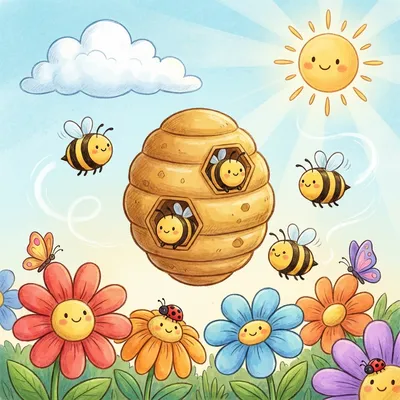


Lyrics
Here is the beehive,Where are the bees?Hidden away where nobody sees.Watch and you'll see themCome out of the hive,One, two, three, four, five!
Actions:
Hold up fist for beehiveShrug shouldersPeek through fingersSlowly open fingers one by onePop up each finger as you countBuzz fingers around like bees!
History and Meaning
"Here Is the Beehive" hides five bees inside a closed fist and then lets them out one finger at a time, counting to five. It is one of the small handful of nursery fingerplays with a known author: the kindergarten pioneer Emilie Poulsson wrote it in 1893.
Origins
The fingerplay was written by Emilie Poulsson, an American educator and pioneer in the early kindergarten movement. Poulsson published the rhyme in her influential 1893 book, Finger Plays for Nursery and Kindergarten. The book aimed to help young children develop fine motor skills and coordinate their movements through imitation. Over the next century, the chant became a staple of children's play-groups in the United States and the United Kingdom.
Meaning & Interpretation
A clenched fist is the hive, and the bees are the fingers tucked inside it. The question "Where are the bees?" sets up a small suspense, and the answer is the payoff: the child uncurls one finger per number, one through five, until the hand opens and the fingers buzz off like a swarm. The countdown teaches sequence and a little patience, since the bees only appear once the question has been asked. The closing buzz lets out the energy the waiting built up.
Who wrote the Here is the Beehive fingerplay?
The rhyme was written by American kindergarten pioneer Emilie Poulsson. She published it in her 1893 collection Finger Plays for Nursery and Kindergarten.
How do you perform the hand actions for Here is the Beehive?
To play, clench your fist to represent the hive. On the count of one to five, extend each finger one by one. Once all five fingers are open, wiggle them and make buzzing noises to simulate flying bees.
Related Nursery Rhymes





Lyrics from nurseryrhymes.info