
Two Little Dickie Birds


Lyrics
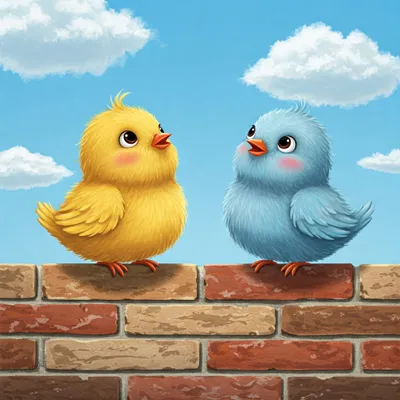
Two little dickie birds sitting on a wall.One named Peter, one named Paul.Fly away, Peter! Fly away, Paul!Come back, Peter! Come back, Paul!
History and Meaning
Two birds, Peter and Paul, sit on a wall, fly away one by one, and come back, acted out with a small sleight of hand: a finger whisked behind the back and brought out again. "Two Little Dickie Birds" goes back to 1765, when the birds were named Jack and Gill.
Origins
The rhyme dates back to the 18th century, first appearing in print in the 1765 London collection Mother Goose's Melody. The earliest recorded version was slightly different, featuring two blackbirds named Jack and Gill sitting on a hill. In the 19th century, the lyrics were modified. The birds were renamed Peter and Paul (historically thought to reference the Christian apostles), and their perch was changed to a wall.
Meaning & Interpretation
The primary purpose of the rhyme is entertainment and physical coordination. It is performed as a fingerplay where the storyteller uses their index fingers to represent the two birds. By hiding one hand behind their back during the "fly away" instruction, and bringing it forward for the "come back" cue, they create a simple illusion of disappearance. This game helps teach infants and toddlers about object permanence and basic commands.
How do you play the Two Little Dickie Birds finger game?
To play, the storyteller raises both index fingers. When they sing "Fly away, Peter," they move their right hand over their shoulder, hiding the finger behind their back. They repeat this with their left hand for "Fly away, Paul." On the "Come back" lines, they bring each hand forward one by one.
Music Video
If the player is unavailable, watch this video on YouTube.
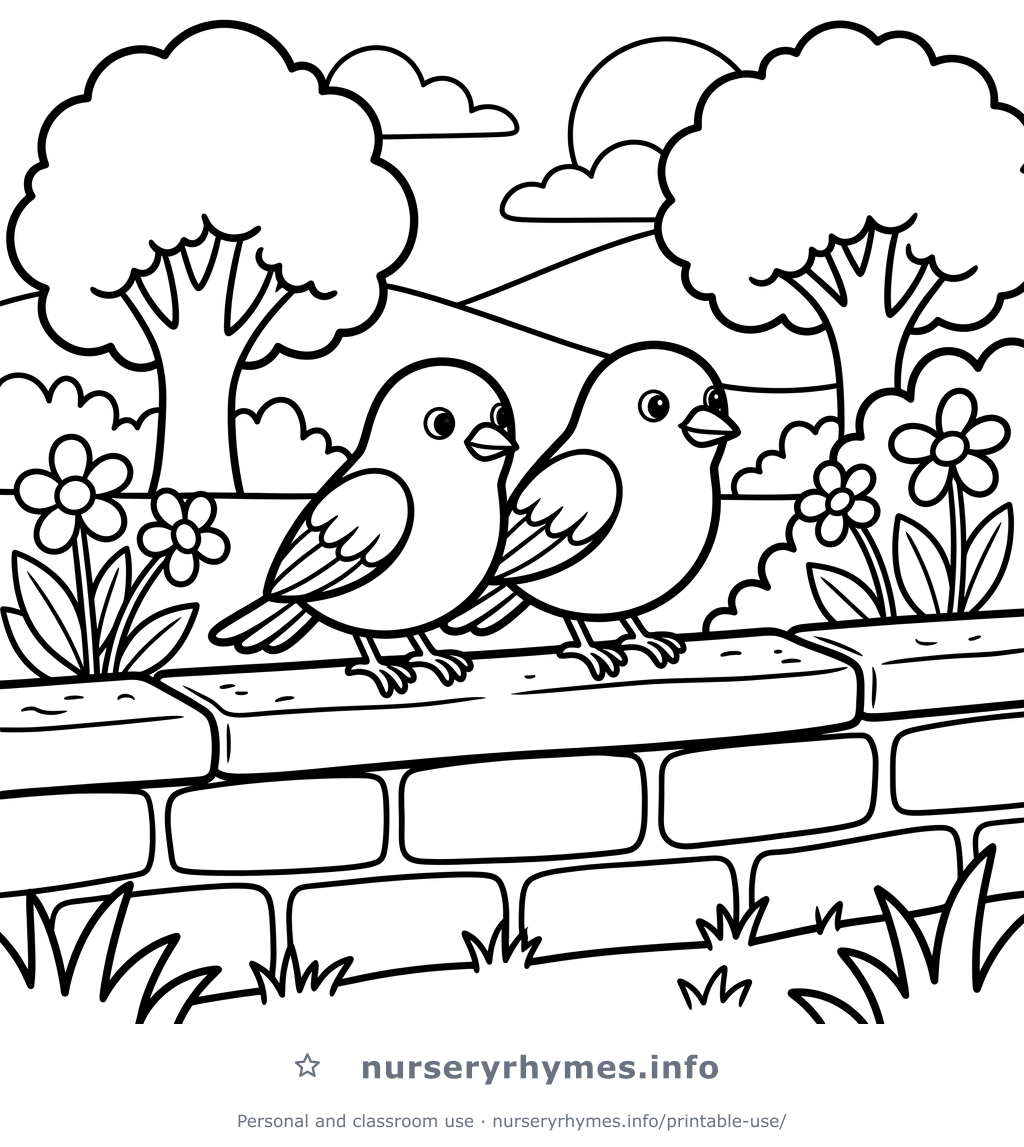
Free Printable Coloring Page
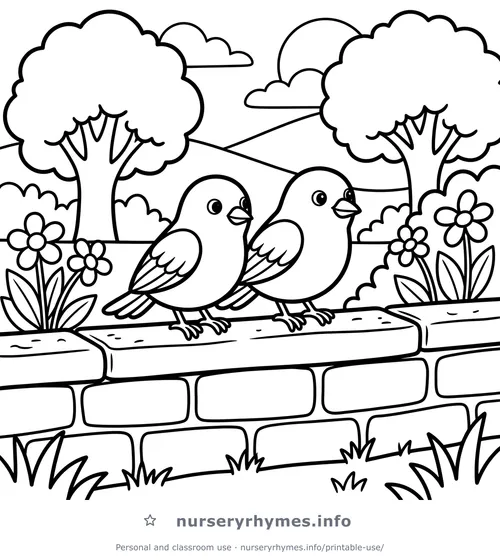
Print this Two Little Dickie Birds coloring sheet for free and let little ones bring it to life with crayons or pencils.
Full-resolution PNG · Fits the paper size selected in your print dialog · Personal and classroom use
Related Nursery Rhymes
Lyrics from nurseryrhymes.info