
O Holy Night


Lyrics
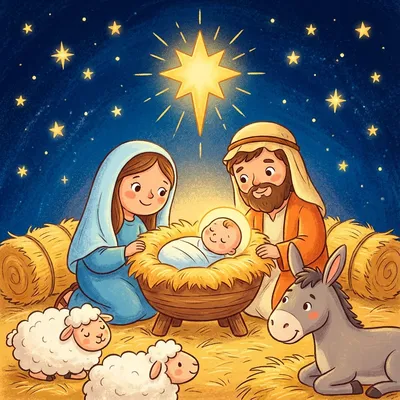
O holy night! The stars are brightly shining,It is the night of our dear Saviour's birth.Long lay the world in sin and error pining,Till He appeared and the soul felt its worth.
History and Meaning
"O Holy Night" is the carol singers reach for when they want to show off, its climbing melody building to a high, held note. Behind that soaring music sits an unlikely backstory: a poem by a lapsed-Catholic wine merchant, music by a Jewish composer, and a spell when French church authorities banned the whole thing.
Origins
The song began in France in 1843, when Placide Cappeau, a wine merchant and poet from Roquemaure, wrote the poem "Minuit, chrétiens" (Midnight, Christians) to celebrate the church's new organ. Cappeau was not particularly religious, but he was inspired by the Gospel of Luke. In 1847, he asked his friend Adolphe Adam, a prominent French composer, to set the poem to music. The resulting piece, "Cantique de Noël," was performed that same year and became an instant success in France.
Controversy & The English Translation
Despite its popularity, the song was eventually banned by French church authorities. When leaders discovered that the poet Cappeau had left the church to join a socialist movement, and that the composer Adam was of Jewish descent, they declared the piece lacked religious spirit. However, the public continued to sing it. In 1855, American minister and abolitionist John Sullivan Dwight translated the song into English. He was especially drawn to the third verse, which spoke of breaking chains and treating the slave as a brother. This version became popular in the United States, particularly as an anti-slavery anthem during the American Civil War.
Who composed the music for "O Holy Night"?
The music was composed by Adolphe Adam in 1847. Adam was a highly successful French composer of opera and ballet, famous for composing the score to the ballet Giselle.
Why was "O Holy Night" originally banned by the church?
The Catholic Church in France banned the song in the mid-nineteenth century after discovering that the author of the lyrics, Placide Cappeau, was a radical socialist and the composer, Adolphe Adam, was Jewish. Church leaders argued the song lacked traditional religious devotion, but the public continued to perform it privately.
Related Nursery Rhymes




Lyrics from nurseryrhymes.info