
The Bear Went Over the Mountain

Lyrics
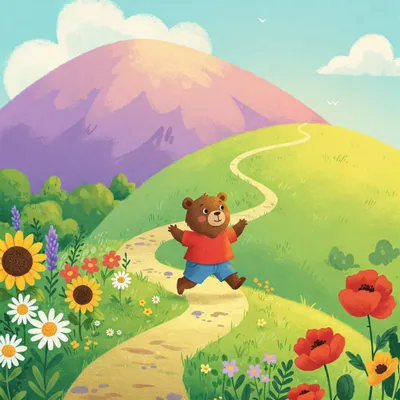
The bear went over the mountain,The bear went over the mountain,The bear went over the mountain,To see what he could see.
But all that he could see,But all that he could see,Was the other side of the mountain,The other side of the mountain,The other side of the mountain,Was all that he could see.
So he went back over the mountain,He went back over the mountain,He went back over the mountain,To see what he could see.
But all that he could see,But all that he could see,Was the other side of the mountain,The other side of the mountain,The other side of the mountain,Was all that he could see.All that he could see!
History and Meaning
The bear climbs the mountain "to see what he could see," and what he sees is the other side of the mountain. That anticlimax is the entire joke, drawn out over many repeats to the tune of "For He's a Jolly Good Fellow."
Origins
The song emerged in the United States through oral folk tradition. While its exact creator remains anonymous and the earliest printed record appeared in 1920, the melody is much older. The song uses the tune of "For He's a Jolly Good Fellow," which is derived from the eighteenth-century French song "Malbrough s'en va-t-en guerre."
Folklorists suggest the rhyme may have connections to traditional German weather customs brought to the United States by immigrants. According to these traditions, which are similar to Groundhog Day, hibernating animals like bears or badgers were observed when they emerged in late winter. If the bear could see over the mountain on a clear day, it indicated that winter was ending. If visibility was poor, the bear would return to hibernation.
Meaning & Interpretation
The humor of the song lies in its anticlimactic irony. The bear climbs the mountain to see what lies beyond, only to find that "the other side of the mountain" is all he can see. This simple, repetitive theme makes it highly engaging for young children, who enjoy the joke and can easily memorize the verses.
The song became a staple of American scout outings and nursery playgroups during the twentieth century. Notable recordings, such as Bing Crosby's performance in a 1961 medley, helped establish the song as a classic of children's musical lore.
What is the origin of The Bear Went Over the Mountain?
The song is a traditional American folk tune of oral origin, first documented in print in 1920. Its melody is adapted from the old French tune "Malbrough s'en va-t-en guerre," which is also used for "For He's a Jolly Good Fellow."
What is the meaning behind the bear climbing the mountain?
The song tells a humorous, ironic story where a bear travels over a mountain only to discover the other side is exactly the same. Folklorists suggest it may also relate to old European weather-prediction beliefs regarding hibernating bears.
Music Video
If the player is unavailable, watch this video on YouTube.
Related Nursery Rhymes


Lyrics from nurseryrhymes.info